Introduction: Why Comforter Choice Matters More Than You Think
A warm bedroom isn't always why you wake up sweaty or keep flipping your pillow at 2 a.m. Your comforter could be the culprit. It traps a surprising amount of body heat, especially when the shell is dense synthetic, the fill is heavy, or the layers are packed so tight that air can't move.
Material matters. Construction matters just as much, maybe more. A breathable outer fabric feels cooler the second it touches your skin, while fill weight decides how much warmth lingers around you all night, and the stitching pattern, the weave, and the other bedding stacked on top all push the temperature one way or the other.
Ever wonder why two cotton comforters can sleep so differently? One's light, crisp, and perfect in July. The other, stuffed with lofty fill, belongs on a bed in January. Choosing well means you look past the color and the thread count and pay attention to how the whole thing is built.
Why Does a 100 Percent Cotton Comforter Feel Cooler?
A 100 percent cotton comforter moves air better than most synthetics, so less heat gets trapped and you still stay insulated. Cotton's fiber structure lets air pass through the shell instead of sealing warmth against your body like a plastic bag.
Natural Fibers Improve Breathability
Cotton fibers leave tiny gaps, and warm air escapes through them. You'll feel the difference most with a lightweight, loosely built cotton comforter. Compare it to a slick microfiber shell: cool for the first ten minutes, then stifling by midnight.
Weave changes everything. Percale uses a plain one-over, one-under construction that feels crisp and airy against your skin. Cotton sateen runs smoother and a little heavier because more yarn floats across the surface. Both are cotton. For a hot sleeper, percale usually wins.
Moisture Management Supports Better Sleep
Cotton pulls perspiration off your skin, so the bed feels less clammy on warm nights. It won't refrigerate you, obviously. What it does is let sweat evaporate naturally and keep moisture from pooling underneath you.
That difference is the whole point. A comforter can be sold as "cooling," but pack it with dense inner fill that blocks airflow and the cotton shell can only do so much for you.
Which Cotton Comforter Is Best for Hot Sleepers?
If you sleep hot, go for a lightweight design: a 100 percent cotton shell, a breathable percale weave, minimal fill, and stitching that holds that fill evenly in place. Fabric by itself doesn't settle the question of how cool a comforter sleeps.
Check four things before you buy. Shell material, weave, fill type, fill weight. A lightweight cotton comforter with a crisp percale shell sheds heat far faster than a thick one wrapped in cotton sateen, and box stitching helps too because it stops the fill from bunching into hot, dense pockets.
For a sticky, humid summer, low-profile cotton comforter sets are the practical version of cooling bedding. Just don't assume every cotton product is light. Plenty of them wrap a cotton shell around a generous polyester fill, and they run hotter than you'd ever guess from the label.
Your climate has a say. A minimal-fill comforter that feels great as summer bedding in Atlanta might leave you shivering through a dry Colorado winter. When your bedroom swings hard between seasons, get an all-season model or plan on a removable layer you can add and pull off.
How Does Fill Weight Affect Sleep Comfort?
What's inside the comforter, both the amount and the type, drives warmth, airflow, and whether you can use it year-round. Nine times out of ten, fill weight affects your overnight temperature more than the shell fabric does.
Lightweight Comforters for Warm Weather
Less insulating material means body heat gets out faster. If you run warm, a thin cotton shell over a low-density cotton or breathable synthetic fill gives you enough cover without that cocooned, buried-alive feeling of a winter comforter.
Loft lies. Some airy-looking fills puff up big and then flatten the moment you lie down, while dense cotton batting can look thin and still trap real warmth. The product weight and the care instructions tell you more than any styled catalog photo ever will.
All-Season Comforters for Year-Round Use
An all-season cotton comforter splits the difference: moderate insulation, still breathable enough for shifting temperatures. It's a good match for a bedroom that hovers between 65 and 72°F most of the year, though your own sleep temperature is the wildcard.
Cold sleeper? Toss a bed blanket on top in winter. Run warm? Use the comforter by itself and strip off the decorative layers before you climb in. That kind of flexibility beats owning one brick of a comforter and sweating through August under it.
Are Cotton Comforters Better Than Synthetic Options?
They pull in different directions. Cotton usually wins on breathability and that natural hand feel, while synthetics tend to wash easier, dry faster, and shrug off wrinkles.
Comparing Breathability
A cotton shell trades air more freely than tightly woven polyester microfiber. A polyester comforter can feel smooth and plush at first touch, but dense synthetic fibers hold heat, and it gets worse when the fill is polyester too.
Consider a linen comforter if you live somewhere warm. Linen breathes beautifully, feels textured, and carries that intentionally rumpled look. It's a bit scratchy fresh out of the package, then softens with every wash. Cotton lands in the middle: softer than most linen from day one, cooler than dense polyester.
Faux fur sits at the hot end, no surprise. Faux fur comforter sets are wonderful winter layers and a terrible idea for anyone who overheats.
Comparing Maintenance and Durability
On care, polyester takes it. Polyester comforter sets resist wrinkles, dry in one cycle, and put up with frequent washing. Cotton can shrink under too much heat, so read the care label before you throw it in the machine.
Good cotton holds up for years, but the seams and fill distribution decide that. A cheaply made comforter can become lumpy after a single hot wash if the fill isn't secured properly. Use a large-capacity machine, mild detergent, low dryer heat. If it barely fits in the drum, haul it to a laundromat's commercial washer instead of cramming it in.
How to Choose the Best Cotton Comforter Set
The right set comes down to whether you sleep hot or cold, the weight you prefer, your bedroom's climate, and how soft you want it. Style tags like luxury comforter sets or hotel-style bedding sets tell you nothing about airflow, so read the material specs first.
Choose the Right Material and Weave
Start with the shell. For a breathable cotton comforter, hunt for "100 percent cotton," not "cotton-rich," which is usually code for a polyester blend. Percale is crisp and breathes. Sateen is silkier and drapes warmer.
Thread count gets way too much credit. A solid 250-thread-count percale can out-breathe a jammed 700-thread-count fabric. Look at the weave, the fill, the finished weight, and the cleaning instructions before you even glance at the decorative details.
Tags reading soft comforter sets, modern comforter sets, and designer comforter sets describe feel or looks, not how the thing handles heat. Same warning goes for affordable comforter sets. A higher price won't guarantee you a cooler bed.
Select the Right Size and Weight
Match the comforter to your mattress, then factor in depth and how much drape you want hanging off the sides. Twin comforter sets cover most single mattresses. Full size comforter sets need real width so the sides don't sit exposed.
Sharing a bed? Queen comforter sets and king comforter sets have to cover both people even when your partner yanks the whole thing over at midnight. Measure the mattress. Don't trust the size label alone. A 14-inch pillow-top eats far more fabric than a slim 9-inch mattress.
Hot sleepers, keep the fill weight low no matter what size you pick. And remember: a king holds more total fill simply because there's more bed to cover.
How to Build a Cooler Bedding Setup
A breathable comforter needs breathable company. Layers that move air with it, not against it. Put heavy microfiber sheets underneath and pile decorative blankets on top, and you've thrown away most of cotton's advantage.
Layer Bedding Without Overheating
Start with breathable sheets, then add only the warmth you'll actually use. Thin quilts or coverlets can stand in for a comforter when it's brutally hot. Come winter, they double as adjustable layers rather than something permanent.
A throw draped at the foot of the bed looks inviting, sure. Set it aside before you go to sleep if you tend to sleep warm. The same goes for thick quilt sets or padded coverlet sets. Five styled layers photograph gorgeously and make zero sense on a humid 78°F night.
Choose Lightweight Bedding Materials
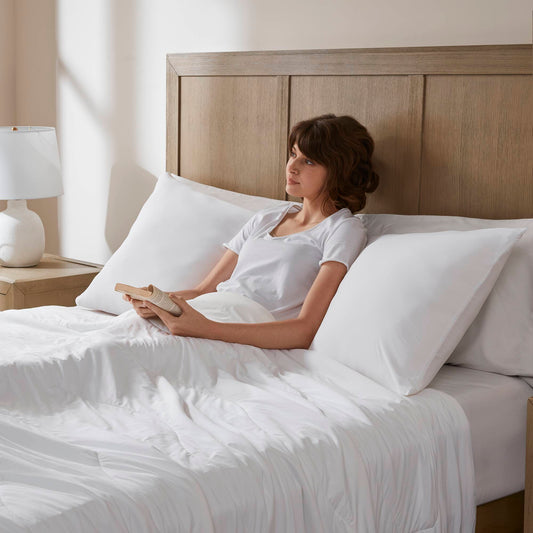
Coordinated bedding sets save you the guesswork, but every piece still has to earn a spot. Pair a cotton comforter with percale sheets, breathable pillowcases, and a light blanket you can kick off at 3 a.m. without rebuilding the whole bed.
Cotton bedding sets and lightweight bedding sets make swapping for the season painless. Want a polished look without the heat? Build with texture, not bulk: a crisp comforter, two shams, one loosely folded throw. Comfortable bedding was never supposed to be heavy.
Common Mistakes When Choosing a Cotton Comforter
Most mistakes come from buying for looks instead of sleep temperature. A gorgeous comforter that cooks you all night is a bad buy, thread count and matching shams be damned.
- Choosing excessive fill weight: low or medium fill for warm rooms; save the high-loft stuff for genuinely cold climates.
- Ignoring weave type: percale for a crisper, airier feel, sateen when softness and drape matter more to you than raw airflow.
- Focusing only on thread count: Construction and weave beat a big number on the packaging every time.
- Selecting the wrong size: measure width, length, and depth. Some full comforter sets barely reach the edges of a deep full mattress.
- Forgetting the local climate: A heavy set that's perfect in Maine will make you miserable on the Gulf Coast.
- Over-layering in summer: strip off the quilts, blankets, and throws before you crank the thermostat down to compensate.
- Quick Comparison: Popular Comforter Materials
- Cotton and linen breathe best. Polyester earns its keep on easy care, and faux fur is there when you want serious winter warmth.
|
Material |
Breathability |
Warmth |
Maintenance |
Best For |
|
100% Cotton |
Excellent |
Light to Moderate |
Easy |
Hot sleepers, year-round comfort |
|
Polyester |
Moderate |
Moderate to High |
Very Easy |
Everyday durability and affordability |
|
Linen |
Excellent |
Moderate |
Moderate |
Warm climates and relaxed styling |
|
Faux Fur |
Low to Moderate |
High |
Moderate |
Cold weather and cozy winter layering |
Frequently Asked Questions
Here are the quick answers to the questions that actually come up while you compare bed comforter sets for warmer, cooler sleep.
Is a 100 percent cotton comforter good for hot sleepers?
Yes. A 100 percent cotton shell breathes and soaks up moisture, which makes it a smart pick if you sleep warm. Pair that shell with lightweight fill, an airy weave, and minimal extra bedding, and you'll feel the payoff.
What fill weight is best for summer comfort?
Lightweight fill wins in summer because it traps less body heat. Fill-weight numbers vary wildly between manufacturers, so compare the finished product weight and any warmth rating instead. An all-season design can work in an air-conditioned room, but if you run really hot, grab the lightest option they sell.
Are cotton comforters better than polyester comforters?
Cotton breathes better and feels less clammy. Polyester's usually easier to clean, dries faster, and costs less. Cotton suits sleepers chasing airflow; polyester makes sense for kids' rooms, guest beds, and any house that washes bedding constantly.
How do you choose the right cotton comforter size?
Match it to your mattress size, then double-check the comforter's real dimensions. Account for mattress depth and how far you want it to drape on each side. Two people on a deep queen? An oversized queen or a carefully measured king covers you both better than a standard queen ever will.
Can you use a cotton comforter all year?
Yes. Plenty of lightweight and all-season cotton comforters carry you through every month. Run breathable sheets and just the comforter in summer, then layer in a quilt, coverlet, or blanket once it gets cold. Seasonal layering is far easier to dial in than one permanently heavy covering.
Final Thoughts: Why 100 Percent Cotton Comforters Remain a Trusted Choice
100 percent cotton comforters keep earning their reputation for cool sleep because natural fibers move air, handle everyday moisture, and feel good against your skin. The shell is only half the story, though. Weave, fill composition, fill weight, stitching, and everything you pile on top all decide how warm your bed gets.
The best comforter sets fit your climate and your sleep habits first, your curtains second. Pick breathable construction, measure carefully, keep the seasonal layers removable. Collections like Madison Park bedding and Madison Park bedding sets bring designer-inspired styling to the table, but let the material specs make your final call. Get the comforter right and you end up with a bed that looks finished and actually lets you sleep.