Introduction: Why Throws and Pillows Instantly Change the Feel of a Room
Not every room refresh requires new furniture, a coat of paint, or a weekend of reorganization. Sometimes the most dramatic improvements come from the smallest changes and in interior styling, few additions deliver as much immediate visual impact as a well-chosen throw blanket and a few thoughtfully placed decorative pillows.
Blankets and throws add softness, warmth, and layered texture to any room they enter. Draped across a sofa, folded at the foot of a bed, or casually arranged over an accent chair, a quality throw changes the emotional character of the space around it within seconds. Decorative pillows work alongside them, softening hard-edged furniture silhouettes, introducing textural contrast, and creating the relaxed, lived-in quality that makes a home feel genuinely welcoming rather than staged.
The beauty of this approach to interior refreshing is its accessibility. A cotton throw blanket, a luxury faux fur throw, a set of pillows in complementary textures these are affordable, reversible, and seasonally flexible updates that achieve what far more expensive interventions sometimes fail to deliver: a room that feels genuinely soft, warm, and inviting from the moment someone walks into it. This guide covers how different throw materials work, how to layer pillows effectively, how to avoid the most common textile styling mistakes, and how to use these simple accessories to transform any room with minimal effort.
Why Throws and Pillows Have Such a Big Impact on Interior Atmosphere
Soft Textures Create Immediate Comfort
There is a straightforward psychological reason why rooms with throws and pillows feel more comfortable than rooms without them: soft, plush surfaces signal safety and ease to the eye before they are ever touched. A sofa covered in firm cushions and nothing else reads as functional. The same sofa with a faux fur blanket draped over one arm and two pillows in a soft, textured fabric reads as a place someone would genuinely want to spend the afternoon. The furniture has not changed only the signals it sends about what it would feel like to settle into it.
This is why cozy blankets and throws are among the most effective tools available for transforming a room's atmosphere quickly. They soften hard upholstery edges, add visual warmth to cool-toned interiors, and introduce the kind of tactile invitation that minimal or purely functional furniture arrangements cannot provide. Even a single quality throw draped naturally over a corner of a sofa or accent chair shifts the room from looking furnished to looking genuinely lived in and comfortable.
Layering Adds Visual Warmth
A room where every surface is flat and uniform same fabric across all upholstery, same finish across all furniture, no textural variation anywhere tends to feel cold and somewhat lifeless despite potentially excellent individual pieces. This flatness is what layered textiles directly address. Blankets and throws introduce a different fabric weight and texture into the visual composition of the room, creating the kind of depth and variation that the eye reads as warmth and comfort rather than precision and control.
The principle behind this is the same one that makes a well-dressed bed more appealing than a bare mattress: layers communicate care, comfort, and the accumulated softness of a space that has been made genuinely welcoming. A living room with a chunky-knit throw on the sofa, a cotton blanket draped over an accent chair, and a collection of pillows in complementary textures has a visual richness that the same room without these elements entirely lacks. The furniture provides the structure; the layered textiles provide the warmth.
Small Accessories Create Big Design Changes
The practical advantage of throws and pillows over larger design interventions is considerable. A new sofa is a major purchase that requires planning, delivery, and significant financial commitment. A quality throw blanket or a set of decorative pillows can be sourced, delivered, and styled in an afternoon at a fraction of the cost and the visual impact on the room is often more immediately noticeable than a furniture change would be, precisely because textiles affect the room's emotional atmosphere rather than just its physical arrangement.
This also makes seasonal styling genuinely easy. Swapping out lightweight cotton throws for heavier, more enveloping luxury blankets and throws as temperatures drop or replacing warm-toned pillows with cooler, fresher accents as spring arrives refreshes the room's atmosphere with minimal effort and no permanent commitment. Throws and pillows are the most flexible tool in a home stylist's kit: easy to change, easy to store, and capable of delivering genuine design impact every time they are updated.
How Different Throw Blanket Materials Change the Feel of a Space
Cotton Throw Blankets for Everyday Softness
A cotton throw blanket is the most versatile textile addition available for any room in the home. Its natural fiber breathes well, which makes it comfortable in a wide range of temperatures genuinely useful in cool weather without becoming stifling as the room warms. The surface of a quality 100 percent cotton blanket is soft against the skin and improves progressively with washing and use, developing the kind of supple, broken-in softness that synthetic alternatives attempt but rarely fully achieve.
In casual living rooms and modern bedrooms, cotton throw blankets work beautifully precisely because they look as comfortable as they feel. Best cotton blanket styles in warm neutrals natural oatmeal, warm ivory, soft sage layer naturally over most furniture without competing visually with the surrounding palette. A well-chosen cotton bed blanket at the foot of a styled bed adds warmth and texture in a way that feels both practical and considered, contributing to the layered softness of the overall arrangement without adding bulk or visual clutter.
Faux Fur Throws for Luxury and Warmth
There are few additions to a room as immediately impactful as a luxury faux fur throw blanket. The plush, napped surface of quality faux fur communicates warmth and softness from across the room the eye reads it before the hand touches it, and the impression is of genuine, tactile luxury that no flat or woven fabric can replicate in the same way. In modern and minimalist interiors, where the furniture tends toward clean lines and the palette toward restraint, a faux fur throw provides the exact softening element the room needs to feel welcoming rather than austere.
A luxury faux fur blanket draped over the arm of a sofa, folded casually across an accent chair, or layered at the foot of a bed creates a visual focal point of plush softness that anchors the room's cozy atmosphere. For winter styling in particular, the combination of a faux fur throw blanket with warm-toned pillow accents creates the kind of enveloping, hotel-inspired comfort that makes a room feel genuinely prepared for the season rather than simply left unchanged as the temperature drops. The faux fur blanket throw is a seasonal styling staple for good reason its impact is immediate, dramatic, and accessible at a wide range of price points.
Fleece Blankets for Relaxed Comfort
Fleece blankets and throws occupy a distinct position in the textile hierarchy not the most refined or visually sophisticated option, but one of the most genuinely comfortable and consistently welcoming for casual, everyday use. The lightweight warmth of a quality fleece blanket throw makes it ideal for living rooms, family rooms, and reading corners where the priority is actual physical comfort during extended periods of relaxation rather than pure visual styling impact.
In relaxed, informal interiors family sitting rooms, casual dens, children's reading spaces fleece throws contribute the right quality of easy, approachable comfort without pretending to be something more formal. A fleece blanket in a warm neutral or a soft earth tone draped casually over a favorite armchair communicates the honest hospitality of a room designed for genuine use rather than for appearances. Paired with simple, durable pillow accents in complementary tones, fleece throws create interiors that feel lived-in and welcoming without requiring any styling effort beyond their natural placement.
Polyester Throw Blankets for Easy Styling
Quality polyester throw blankets have improved considerably as textile technology has advanced, and modern versions offer a combination of durability, easy care, and soft surface texture that makes them a practical choice for high-use areas where natural fiber care requirements are less convenient. A polyester throw blanket in a brushed or velvet finish can achieve a visual softness that approaches the quality of natural fiber alternatives while remaining fully machine washable, resistant to pilling, and durable through the kind of daily use that other materials sometimes struggle with.
For contemporary and modern interiors where throw blankets need to perform as well as they look pulled from the basket regularly, used throughout the day, and laundered frequently a well-chosen throw blanket in polyester offers reliable style and comfort without demanding the careful maintenance that some natural fiber options require. In coordinated neutral tones, a quality polyester throw contributes the same layered warmth to a living room styling arrangement as its more expensive natural fiber equivalents, and its longevity through regular use makes it a genuinely practical investment.
How Decorative Pillows Instantly Refresh Furniture
Pillows Add Softness to Seating Areas
A sofa without pillows, however well-upholstered and carefully chosen, looks like furniture waiting to be used. The same sofa with three or four decorative pillows in complementary textures and tones looks like a space where someone has already settled in and found it comfortable a subtle but significant difference in how the room reads to anyone entering it. Decorative pillows do not merely add physical comfort to seating; they add the visual signal of comfort, which changes how inviting the room feels before anyone has even sat down.
This quality is equally valuable on beds, on accent chairs, and in reading corners. A bedroom without decorative pillows at the head of the bed looks functional; the same bedroom with a considered pillow arrangement looks genuinely styled and welcoming. The pillows do not need to be elaborate or expensive to achieve this effect a few well-chosen pieces in quality fabrics and coordinated tones are sufficient. What matters is that they are present, that they contribute softness and textural interest, and that they have been placed with at least minimal intentionality rather than simply dropped wherever they happened to land.
Mixing Pillow Sizes Creates Depth
A sofa or bed dressed with pillows that are all identical in size and shape reads as uniform rather than layered the eye registers sameness rather than the more interesting visual rhythm that varied sizing creates. The most naturally appealing pillow arrangements combine multiple sizes: larger square pillows at the back providing structural support and visual height, medium squares or standard pillows in the middle layer, and a smaller lumbar or accent pillow at the front pulling the arrangement together with a final note of contrast.
This progression from large to small, back to front, mirrors the depth and layering that professional interior stylists apply to all textile arrangements building from structure to softness, from neutral to accent, from simple to detailed. The effect looks considered without appearing effortful, which is the precise quality that makes a room feel designed rather than decorated. Avoiding the perfectly uniform pillow arrangement in favor of varied sizes is one of the simplest styling upgrades available, requiring no new purchases if the right mix of existing pillows can be identified and recombined.
Texture Matters More Than Bold Patterns
The instinct to introduce personality through decorative pillows via bold patterns and strong colors is understandable, but texture almost always delivers more lasting satisfaction and greater visual warmth than pattern alone. A pillow in smooth boucle fabric, a velvet cushion in a warm muted tone, a knit-covered accent in natural oatmeal each of these introduces genuine visual and tactile interest through the quality of its surface rather than through the complexity of its design. These textured pieces also integrate more easily with a wider range of furniture and surrounding décor, remaining visually effective as the room evolves rather than becoming dated as pattern preferences shift.
Neutral pillows with strong textural character linen, boucle, velvet, woven cotton, chunky knit create the calm, layered richness that contemporary interior design consistently favors. They contribute warmth and softness to the room without competing with the furniture or the existing color palette, and they age gracefully because their appeal is rooted in material quality rather than trend. Choosing texture over pattern in decorative pillows is one of the styling decisions that most reliably improves with time rather than becoming a regret.
Best Ways to Style Throws and Pillows in Different Rooms
Living Room Styling Ideas
The living room is where blankets and throws deliver their most visible styling impact, because the sofa is usually the room's dominant furniture piece and the primary visual focus of the space. A throw draped casually over one arm of the sofa not folded with geometric precision but allowed to fall naturally with a slight artful looseness communicates the relaxed ease that makes a living room feel genuinely welcoming. The key word is casually: throws styled too formally look staged rather than lived-in, and the lived-in quality is precisely what creates the feeling of warmth.
Layering pillows across the sofa in coordinated neutral tones adds the complementary softness that makes the arrangement feel complete. A sofa throw and two or three pillow accents in a cohesive color family warm whites and oatmeal tones, earth tones, or soft blues and sand create a living room that looks styled without appearing over-designed. Cozy blankets and throws draped over nearby accent chairs extend the warmth of the arrangement beyond the sofa, creating a consistent sense of comfortable invitation throughout the seating area.
Bedroom Layering Tips
In the bedroom, bed blankets and throws serve a styling role that is both practical and aesthetic. Folded neatly and laid across the lower third of the bed or casually draped across one corner in a more relaxed arrangement a throw adds the final textural layer that completes a styled bed without requiring a full bedding overhaul. The contrast between the smooth surface of the duvet or comforter beneath and the different texture of the throw above creates exactly the visual depth that makes a well-dressed bed look genuinely luxurious.
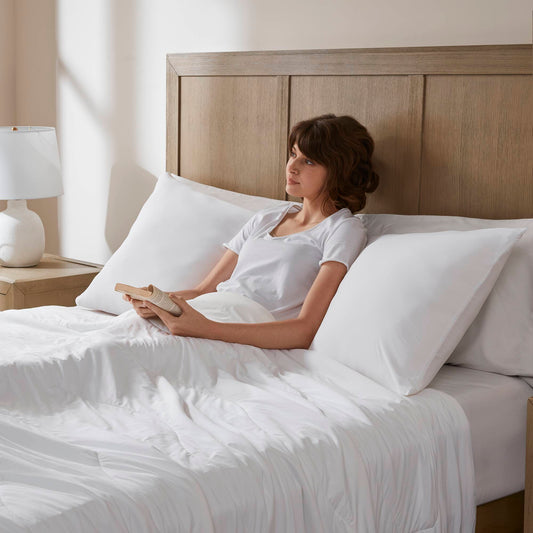
Faux fur blankets work particularly well in this position, their plush surface providing a visually striking contrast to cotton or linen bedding beneath and creating an immediate impression of warmth and hotel-inspired softness. Cotton bed blankets in complementary neutral tones add a lighter, more breathable layer suitable for warmer months. Combined with a properly sized pillow arrangement at the head sleeping pillows behind, decorative accent pillows in front in textured or contrasting fabrics a well-chosen throw completes the bedroom styling picture with minimal effort and considerable effect.
Reading Corners and Cozy Nooks
A reading corner or small seating nook is the context where a single well-chosen throw blanket makes its most concentrated and immediate impact. An accent chair with a chunky-knit throw draped over one arm and a soft pillow placed in the seat is already a complete, inviting space the throw makes the chair look as though someone has already spent a pleasant hour in it and will return shortly. This quality of apparent use and comfort is exactly what transforms a corner from a storage area for furniture that did not fit elsewhere into a genuinely desirable spot within the room.
For seasonal styling updates, reading corners and small nooks are particularly responsive to simple textile changes. Swapping a lightweight cotton throw for a heavier fleece blanket or luxury faux fur throw as autumn arrives shifts the corner's atmosphere from breezy and casual to warm and enveloping with essentially no effort. Adding a slightly heavier accent pillow in a richer fabric velvet, boucle, or a warm wool blend completes the seasonal transition. These are genuinely fast, affordable updates that produce a visible and immediately felt difference in how comfortable and welcoming the corner feels.
Why Neutral Throws and Pillows Feel More Luxurious
Warm Neutral Colors Create Calm Interiors
Warm neutrals beige, cream, soft taupe, natural oatmeal, warm gray create a visual calm in a room that bolder or more saturated colors consistently disrupt. Throws and pillows in these tones integrate naturally with most furniture finishes and existing room palettes, which means they contribute to the overall harmony of the space rather than competing with it for attention. A neutral throw on a sofa in almost any color reads as a natural addition; a boldly patterned or strongly colored throw demands a specific context to avoid creating visual tension.
The calm that warm neutral throws and pillows create is not passivity it is the visual equivalent of a deep breath, a reduction in the stimulation the room asks the eye to process. This reduction is what makes neutral textiles feel more luxurious than their louder alternatives: they allow the quality of the materials the softness of the cotton, the plushness of the faux fur, the texture of the linen to register as the primary impression rather than the color or pattern diverting attention from it.
Earth Tones Add Cozy Warmth
Earthy throw colors warm clay, muted olive, dusty rust, sandy terracotta, soft mushroom brown bring the grounded, organic warmth of natural materials into a room's textile palette in a way that both cooler neutrals and brighter colors cannot replicate. These tones have an inherent coziness rooted in their association with natural, material-rich environments the color of raw linen, fired clay, aged wood, and dry earth that makes them feel deeply comfortable in a way that goes beyond aesthetic preference.
Earth-toned throws and pillows work particularly well in contemporary and rustic homes where the design already draws on natural materials and organic textures. A clay-toned cotton throw over a linen sofa, a dusty olive pillow against a natural wood chair these combinations feel inevitable in the best sense, as though the room was always meant to contain them. Earth tones also age gracefully, remaining visually effective as surrounding décor changes rather than becoming period-specific.
White and Ivory Textures Feel Airy and Elegant
White and ivory throws and pillows occupy a unique position in interior styling they add lightness rather than weight to a room, which makes them particularly valuable in spaces that already feel warm or heavy and need a note of freshness and air. A white or ivory faux fur throw on a dark sofa, a cream cotton blanket on a richly colored bed, or ivory textured pillows against warm-toned upholstery all introduce brightness and softness simultaneously, lifting the room's overall atmosphere without disturbing its warmth.
The elegance of white and ivory textiles comes from their combination of visual lightness and textural richness. A flat white pillow reads as simple and somewhat cold; a white boucle cushion or an ivory faux fur throw reads as refined and genuinely luxurious. The texture adds the dimension that prevents lightness from tipping into coldness, and the resulting combination light in color, rich in surface achieves the airy elegance that is one of the most consistently appealing qualities in contemporary interior styling.
Popular Interior Styles That Depend on Throw and Pillow Layering
Modern Minimalist Interiors
Minimalist interior design depends on textiles to prevent its essential restraint from crossing into sterility. A room with minimal furniture, bare surfaces, and a controlled palette has very few elements available to create warmth and visual comfort which means the throws and pillows it does contain must do this work with exceptional efficiency. Simple neutral pillows in quality textured fabrics linen, boucle, or smooth cotton in warm whites and quiet grays and a single well-chosen lightweight throw in a complementary tone provide all the softness a minimalist interior requires without adding any element that disturbs its essential calm.
The minimalist approach to throw and pillow styling is one of deliberate restraint: fewer pieces, better quality, placed with precision. One or two carefully chosen pillows on a sofa, a single throw folded or draped with minimal fuss these sparse textile additions work harder in a minimalist context than a more generous arrangement would, because there is nothing else in the room competing for attention. Each piece's quality and texture registers fully, which is why material choice matters especially here.
Luxury Hotel-Inspired Spaces
Luxury hotel-inspired interiors depend on the layered, coordinated textile quality that makes hotel rooms feel so immediately welcoming. Plush faux fur blanket throws at the foot of the bed, multiple pillow layers in varying sizes and complementary fabrics, throws draped with practiced casualness over upholstered seating these elements recreate the sense of prepared, anticipatory comfort that the best hotel rooms deliver the moment a guest walks through the door.
The key to achieving this look without it appearing over-staged is the quality of individual pieces and the coordination between them. Cozy luxury blankets and throws in warm ivories and creams, decorative pillows in smooth and textured fabrics that share the same tonal family, and the slight artful looseness of casually placed throws all contribute to a room that looks cared-for rather than fussed-over. Madison Park bedding and textile collections offer coordinated options that make this kind of tonal, layered look accessible without requiring individual piece-by-piece matching.
Scandinavian-Inspired Homes
Scandinavian interior styling uses throws and pillows with the same principled restraint it applies to all of its furniture and décor decisions. Natural materials in honest textures cotton throws in undyed naturals and pale grays, linen pillow covers in warm whites and quiet earth tones, occasional wool or knit accents in soft muted colors create the cozy, uncluttered atmosphere that defines the aesthetic. Nothing is excessive; everything contributes.
The soft neutral textures of a Scandinavian-styled room are its primary source of warmth, because the palette is too restrained and the décor too minimal to create warmth through color or pattern. A quality cotton throw blanket in natural oatmeal on a simple linen sofa, a handwoven pillow or two in complementary undyed tones these provide the textural depth and human softness that a Scandinavian room needs without adding anything that disturbs its thoughtful quiet. The comfort feels earned through material quality rather than accumulated through quantity.
Cozy Contemporary Living Rooms
Contemporary living rooms that prioritize genuine everyday comfort use throws and pillows as the primary tools for creating the warm, layered atmosphere that makes a room feel genuinely lived in rather than newly furnished. Warm blankets and throws in earth tones and soft neutrals draped across modern sofas and accent chairs, decorative pillows in plush or textured fabrics layered across seating surfaces, and the occasional faux fur or boucle accent piece elevating the overall softness of the arrangement these are the building blocks of the cozy contemporary living room.
In this context, more layering is generally better than less, provided the color palette remains sufficiently coordinated to prevent the accumulation from reading as clutter rather than comfort. Warm neutrals and earth tones in varying textures across a sofa and its surrounding chairs cotton and velvet and boucle all together, in shades that share a warm undertone create the kind of deeply comfortable, visually rich seating area that invites extended stays and genuine relaxation rather than careful perching.
Common Mistakes That Make Throws and Pillows Look Cluttered
Even the most beautifully chosen throws and pillows underperform when certain fundamental styling errors are made. These are the most common ones and the most straightforward to correct.
- Using too many competing patterns: A sofa with three differently patterned pillows and a fourth-patterned throw becomes a visual argument rather than a comfortable seating arrangement. Patterns compete for the eye's attention in a way that unified textures do not, and the result reads as busy rather than layered.
- Overcrowding sofas with excessive pillows: Pillows should add softness without consuming the seating surface they are meant to enhance. A sofa where every cushion position is occupied by a decorative pillow looks more like a display than a place to sit and the constant arrangement and rearrangement required to actually use the sofa quickly makes the pillows feel like an obstacle rather than an addition.
- Ignoring texture balance: Throws and pillows all in the same flat, smooth fabric create the same visual flatness they are supposed to prevent. At least two distinct textures across the arrangement smooth and plush, structured and loose, matte and slightly sheen are needed to create genuine depth and warmth.
- Choosing stiff or low-quality fabrics: A throw that does not drape naturally, or a pillow cover that feels scratchy or cheap against the skin, undermines the comfort invitation that throws and pillows are supposed to extend. Quality of material is the non-negotiable foundation of effective textile styling.
- Poor color coordination: Throws and pillows in colors that conflict with one another or with the surrounding furniture create visual tension rather than visual warmth. Choosing pieces whose undertones agree all warm, all cool, or all neutral is the simplest path to a coordinated, restful arrangement.
- Folding throws too formally instead of styling naturally: A throw folded into a perfect rectangle and laid symmetrically across a sofa cushion looks staged rather than comfortable. Throws should be arranged with a degree of natural looseness slightly asymmetrical, with a natural drape that communicates genuine use and comfort rather than display-ready precision.
How to Refresh a Room Instantly Using Throws and Pillows
Add One Rich Texture Layer
The single most impactful quick change available for a room that feels flat or cold is the addition of one genuinely textural throw or pillow. A faux fur throw blanket draped over a corner of the sofa, a chunky-knit blanket folded across an accent chair, a boucle pillow placed against the existing sofa cushions any of these additions introduces immediate tactile richness that the room previously lacked. The change is visible from across the room before anyone gets close enough to touch anything, because the textural contrast the new piece creates reads as warmth at the most immediate visual level. This is the fastest possible interior refresh, achievable in minutes and reversible at any time.
Use Coordinated Neutral Colors
When existing throws and pillows feel mismatched, dated, or visually busy, the simplest correction is replacing them with coordinated neutral alternatives in a single warm color family. Beige, cream, oatmeal, warm gray, and soft ivory pieces from different sources different fabrics, different textures, even different brands will integrate naturally with one another when their undertones share the same warm quality. This coordination creates the visual calm and cohesion that makes a room feel thoughtfully styled, without requiring every piece to be from the same collection or even the same store. Neutral coordination is the styling principle that makes simple, affordable throws and pillows look considered and intentional.
Layer Different Fabric Weights
Building a throw and pillow arrangement from fabrics of genuinely different weights and constructions creates the tactile variety that makes a room feel truly comfortable rather than merely decorated. A lightweight cotton throw paired with a heavier, plush faux fur accent or a smooth linen pillow alongside a chunky-knit cushion creates a sensory conversation between the pieces that makes the arrangement feel richer than any single fabric alone achieves. The contrast between light and heavy, smooth and textured, airy and plush is what produces the layered quality that the most inviting rooms share across every style and every price point.
Style Throws Casually
Perhaps the simplest and most counterintuitive styling improvement available for throws is to style them less deliberately to let them fall naturally rather than arranging them with geometric precision. A throw that is allowed to drape asymmetrically over one arm and seat of a sofa, with a natural looseness in its folds rather than a structured tuck, communicates the relaxed ease of a room where people actually spend time. This casual quality is the specific character that makes a space feel inviting rather than staged it suggests that the throw has been used and replaced, that the sofa is comfortable enough to be regularly occupied, and that the room is a place of genuine living rather than a showroom arrangement waiting for visitors.
Frequently Asked Questions
How do throws make a room feel cozier?
Throws make a room feel cozier through a combination of visual and physical mechanisms that work simultaneously. Visually, a throw draped over furniture adds a layer of soft texture that breaks the visual uniformity of flat upholstery surfaces, creating the kind of depth and warmth that the eye reads as comfort and invitation. Physically, having a throw within easy reach communicates that the room has been prepared for the kind of extended, relaxed use that genuine coziness requires that warmth is available without effort, and that settling in for the afternoon is not only possible but actively anticipated. The combination of these visual and practical signals changes the atmosphere of a room in a way that no amount of furniture rearrangement or color change achieves as quickly or as directly.
What throw blanket materials feel the softest?
Among the softest throw blanket materials available for everyday use, faux fur consistently ranks at the top for immediately perceptible plushness the napped surface is the softest to the touch of any standard throw material and the most visually dramatic in communicating that softness from a distance. High-quality fleece throws offer a different but equally genuine softness that is warm and lightweight simultaneously, making them among the most physically comfortable for extended use. Washed or stonewashed cotton throw blankets in quality natural fiber develop a supple, broken-in softness with use that synthetic alternatives cannot fully replicate over time. For a more structured but still deeply soft texture, chunky-knit throws in cotton or wool blends offer the kind of dimensional, tactile warmth that is unique to the knit construction.
Are faux fur throw blankets practical?
Yes quality faux fur throw blankets are considerably more practical for everyday use than their luxurious appearance might suggest. Most well-made faux fur blanket throw products are fully machine washable when manufacturer care instructions are followed, and quality construction maintains the plush texture through repeated laundering rather than flattening or matting over time. For decorative layering purposes, a faux fur throw at the foot of a bed or draped over a sofa arm is essentially no-maintenance during regular use it simply needs to be replaced if it slips out of position, which takes seconds. For colder months, the genuine warmth that a quality faux fur blanket provides makes it functionally useful as well as visually appealing, delivering on its promise of plush comfort rather than merely suggesting it.
How many pillows should a sofa have?
The right number of pillows for a sofa depends on the sofa's size and the overall styling approach of the room, but the general principle is enough for visual balance and physical comfort without consuming the seating surface. For a standard three-seat sofa, three to four decorative pillows is typically the ideal range enough to create a layered, styled arrangement without making the sofa look inaccessible or difficult to use. For a two-seat sofa or loveseat, two to three pillows is usually sufficient. The goal is pillows that add softness and textural interest at the edges and back of the sofa while leaving the primary seating areas clearly available, so the arrangement looks inviting rather than fortified.
What colors make throws and pillows feel luxurious?
Warm neutral tones consistently make throws and pillows feel more luxurious than bolder or more saturated colors, because they allow the quality and texture of the materials to register as the primary impression rather than the color claiming that attention first. Cream, ivory, warm oatmeal, soft taupe, and warm gray in quality fabrics particularly faux fur, boucle, velvet, and fine woven cotton create a visual richness that reads as intentional and refined. Earth tones in the same quality materials add warmth and depth without brightness. The principle that applies across all of these is that the most luxurious-looking throws and pillows are those where the fabric quality is apparent from a distance, which is most easily achieved when color restraint allows texture to be the main event.
Final Thoughts: Why Throws and Pillows Are the Fastest Way to Refresh a Space
Interior design can be expensive, time-consuming, and difficult to reverse. Throws and pillows are none of those things and that combination of accessibility, flexibility, and immediate impact makes them among the most genuinely useful tools available for anyone who wants their home to feel more comfortable, more welcoming, and more visually warm without committing to a major intervention.
The texture of a faux fur throw, the softness of a quality cotton blanket, the plush surface of a boucle pillow these are the kinds of sensory details that change how a room feels to be in at a level that furniture choices and paint colors rarely touch as directly or as quickly. They communicate comfort visually before they are touched, and they deliver on that communication physically when they are. A room with well-chosen, well-placed throws and pillows is a room that tells everyone who enters it that they are welcome to stay a while which is the most important thing any home can communicate.
The most effective approach is also the simplest: choose natural or quality materials that feel as good as they look, keep the color palette warm and coordinated, layer different textures rather than repeating the same one, and style throws with the casual looseness of genuine use rather than the rigid precision of a showroom. Applied consistently, these principles produce rooms that feel genuinely inviting every day not just on the days they were styled, but every ordinary day that follows.