Introduction: Why Hotel Bedrooms Feel More Comfortable Than Most Homes
Almost everyone has experienced it: checking into a hotel room, pulling back the covers, and feeling an immediate, almost involuntary sense of comfort that is difficult to fully explain. The bed feels softer. The sheets feel cleaner. The whole arrangement looks more inviting than the bed waiting at home even when the home bedroom is well-furnished and well-kept. What is actually happening in those hotel rooms, and why does it feel so different?
The answer is almost always the bedding. Hotel rooms are intentionally designed around a single priority making guests feel as comfortable and relaxed as possible from the moment they walk through the door and luxury bedding is the primary tool for achieving that effect. The fabric quality, the layering approach, the color coordination, the way the bed is styled, and the visual calm the whole arrangement creates all work together to produce a sleeping environment that feels genuinely exceptional.
The good news is that the principles behind this hotel bedroom comfort are not secrets, and they are not exclusively available to hospitality design budgets. Cotton bedding sets in quality natural fabrics, luxury bedding layered with intention, neutral palettes that calm rather than stimulate, and a consistent approach to symmetry and visual order are all accessible to anyone willing to apply them. This guide breaks down exactly why hotel beds feel the way they do and exactly how to recreate that experience at home.
Why Bedding Plays the Biggest Role in Hotel Bedroom Comfort
The Bed Is the Visual Center of the Room
In a hotel bedroom, nearly every design decision points toward the bed. The lighting is positioned to illuminate it warmly. The furniture arrangement creates a clear, unobstructed approach to it. The color palette of the walls and floor is chosen to complement rather than compete with the bedding that covers it. This intentional centering of the bed in the room's design hierarchy means that when a guest walks in, the bed is immediately and completely the most visually dominant element in the space.
The bedding that covers that central piece sets the entire emotional tone of the room within seconds. A bed dressed in layered, clean, soft bedding sets a tone of comfort, care, and genuine quality before the guest has even touched the mattress. A bed dressed carelessly in flat, mismatched, or visually busy bedding sets an entirely different tone. Hotels understand this influence and invest accordingly in bedding that communicates luxury and rest the moment it comes into view.
Hotels Prioritize Comfort Through Texture
The most immediately noticeable quality of a hotel bed is not simply that it is soft it is that the softness has dimension to it. Multiple textures are present simultaneously: the smooth, cool surface of a pressed cotton sheet, the gentle weight of a comforter above it, the structured softness of quilted layers visible beneath the pillows, the casual warmth of a folded throw at the foot. Each of these textural elements contributes something distinct, and their interaction creates a sensory richness that flat, single-texture bedding simply cannot replicate.
This multi-layered approach to texture is not accidental or purely aesthetic it reflects an understanding that comfort is experienced physically and emotionally at the same time. Soft bedding sets that offer genuine textural variety communicate warmth and care to the eye before they are touched, and that visual communication primes the guest to relax. The bed looks comfortable, and looking comfortable is a significant part of what makes a room feel like a genuine retreat.
Coordinated Bedding Creates Visual Calm
Hotels are careful to avoid the visual noise that mismatched or poorly coordinated bedding creates. Instead of combining colors or patterns that compete with one another, hotel bedding typically uses matching or carefully tonal palettes variations of the same neutral, different textures within the same color family, layers that harmonize quietly rather than asserting themselves individually. The result is a bed that looks settled and complete rather than assembled from whatever was available.
This visual coordination has a direct psychological effect. A bedroom where everything is in quiet agreement where the bedding, the pillows, the throws, and the wider room palette all relate to one another harmoniously feels genuinely calming in a way that a bedroom with conflicting visual elements does not. Neutral luxury bedding sets in coordinated tones are the primary tool hotels use to create this calm, and it is one of the most immediately replicable aspects of hotel bedroom design for homeowners willing to apply the same principle.
Why Cotton Bedding Sets Feel So Comfortable in Hotels
Cotton Feels Breathable and Soft
Quality hotel bedding almost universally starts with cotton and for reasons that go beyond tradition or habit. Natural cotton fiber is inherently porous, which means it allows air to circulate through the weave rather than trapping body heat close to the skin. This breathability is what gives 100 percent cotton bedding sets their characteristic freshness the sense of sleeping on something clean and cool that remains comfortable throughout the night rather than becoming warm and close as synthetic materials often do.
The softness of quality cotton is also genuinely distinctive in a way that is immediately noticeable against the skin. Premium cotton fibers are long and smooth, producing a fabric surface that feels pleasant from the first contact and improves progressively with washing and use. This combination of breathability and softness is why cotton remains the foundation of hotel bedding across every price point from mid-range properties to the most exclusive luxury properties in the world.
Luxury Cotton Bedding Feels Cleaner and Fresher
There is a particular quality to freshly laundered, high-quality cotton bedding that is almost impossible to fully describe but immediately recognizable when experienced. It feels clean in a way that goes beyond being simply washed the fabric has a crispness and a lightness that communicates freshness before it is even touched. This quality is what hotels invest in when they specify luxury cotton bedding for their rooms, and it is a significant part of why hotel beds feel different from most home beds even when the mattress quality is comparable.
Organic cotton bedding sets offer this quality with the additional benefit of naturally softer fibers cotton grown without synthetic chemical treatment retains more of its natural suppleness, producing a fabric that feels noticeably more gentle against the skin. For homeowners seeking to recreate the clean, fresh comfort of hotel bedding at home, organic cotton bedding is one of the most reliable and accessible starting points available.
Layered Cotton Bedding Improves Sleep Comfort
The layering approach that hotels apply to cotton bedding is central to why those beds feel so consistently comfortable across different guests, different body temperatures, and different seasons. A cotton fitted sheet provides a breathable, smooth base layer against the mattress. A cotton flat sheet creates a clean, lightweight covering. A quality comforter or duvet provides warmth above that without trapping heat. Each layer serves a distinct function in the overall comfort system, and the interaction between them creates a sleeping environment that is both more comfortable and more adjustable than any single bedding piece could achieve.
Best cotton bedding sets used in hotel contexts are designed with this layering function in mind sized generously to drape with comfortable depth over the sides of the mattress, finished to maintain their quality through repeated professional laundering, and chosen in fabrics that feel as pleasant on the skin as they look in the room. These qualities are equally available in domestic cotton bedding, provided the same care is taken in selection and use.
How Layered Luxury Bedding Creates a Hotel Feel
Multiple Layers Add Softness and Depth
The visual fullness of a well-dressed hotel bed is not the product of expensive materials alone it is the product of thoughtful layering. A flat sheet, a comforter, a quilted coverlet or bedspread, a folded throw at the foot, and a carefully arranged stack of pillows in matching and accent covers all contribute to a bed surface that has genuine visual depth. The eye moves across multiple distinct layers rather than registering a single flat surface, and the result reads as luxury even before any individual fabric quality is assessed.
This depth of layering also communicates care and attention in a way that minimal bedding cannot. A bed with only a single flat comforter looks functional; a bed with multiple coordinated layers looks composed, considered, and genuinely inviting. The addition of decorative pillows at the front of the arrangement, in coordinating covers that complement the comforter and throw, completes the hotel aesthetic a bed that looks like someone thought carefully about how it should feel to climb into it.
Quilted and Textured Bedding Feels More Relaxing
The quilted layers that appear in most hotel bedding arrangements do more than simply provide warmth the stitching patterns that define them create a subtle visual texture that makes the bed look genuinely inviting even from a distance. Where a flat comforter surface reads as undifferentiated and somewhat cold, a quilted surface has depth and character the stitching creates small shadows and highlights across the fabric that give the bedding a dimensional, tactile quality even when it is not being touched.
This visual texture has a psychological effect on comfort perception that is well-established in interior design. Surfaces that look soft and textured feel more approachable and more welcoming than smooth, flat ones. A quilted coverlet or a textured comforter positioned in a hotel room communicates an invitation to relax in a way that a flat, smooth bedding surface does not and that communication is part of what makes hotel bedrooms feel more immediately comfortable than most home bedrooms where similar textural attention has not been applied.
Faux Fur Bedding Adds Warmth and Luxury
In luxury hotel contexts, particularly in cooler climates or winter seasons, faux fur bedding accents appear with increasing frequency as a way of adding immediate tactile warmth and visual richness to a bedding arrangement without requiring dramatic changes to the underlying palette or layering structure. A faux fur bedding comforter set or a single faux fur throw draped across the foot of an otherwise crisp white or neutral bed creates a striking contrast the napped, plush surface of the fur against the smooth cotton or linen beneath that reads as unambiguously luxurious.
A luxury faux fur bedding set or accent piece brings this quality home in a practical and accessible way. Because faux fur carries its warmth through texture rather than color, it works seamlessly within the neutral, restrained palettes that hotel-inspired bedding typically uses. Ivory faux fur over white cotton, cream faux fur over oatmeal linen, or a natural-toned faux fur throw across a sage-toned base all create that plush, high-end look without introducing any element that disrupts the calm, coordinated visual atmosphere that hotel bedding depends on.
Why White and Neutral Bedding Feels More Luxurious
White Bedding Creates a Clean Hotel Look
The predominance of white bedding in luxury hotel rooms is not arbitrary it reflects a deeply practical understanding of what creates the perception of cleanliness and freshness that guests value most highly. White bedding shows that it is clean in a way that darker or patterned bedding cannot. A white sheet with a single mark is visibly imperfect; a white sheet that is pristine signals genuine care and hygiene with complete visual clarity. This transparency is precisely why hotels chose white in the first place, and why guests associate white bedding with cleanliness and quality so reflexively.
Modern bedding sets and designer bedding sets in clean whites achieve this effect at home with the same reliability. White bedding also has the quality of working with almost any room palette rather than against it, which makes it the most flexible base choice available for a hotel-inspired bedroom arrangement. Whatever wall color, flooring material, or furniture finish surrounds it, a well-chosen white luxury bedding set creates an immediate impression of freshness and light.
Neutral Bedding Helps Bedrooms Feel Calmer
Beyond white, the broader family of warm neutrals soft ivory, natural beige, muted oat, warm cream, pale greige creates a bedroom atmosphere that is genuinely calming in a way that stronger or more saturated colors cannot match. Neutral bedding removes visual stimulation from the sleeping environment rather than adding to it. The bedroom becomes a space where the eye has nothing demanding to process, which allows the body to move more easily into the relaxed, receptive state that precedes and supports good sleep.
This is not a subtle effect. Rooms with soft, neutral luxury bedding sets consistently feel more restful to be in than identically dimensioned rooms with bold or busy bedding, even when every other variable is held constant. Hotels understand and apply this principle universally across their highest-quality rooms the bedding is calm, the palette is restrained, and the overall visual environment communicates rest rather than activity or stimulation.
Tonal Layering Makes Beds Look Expensive
One of the most quietly effective styling techniques in hotel bedroom design is tonal layering building a bedding arrangement from pieces that are closely related in color but distinct in texture and fabric weight. An ivory cotton sheet beneath a cream quilted coverlet, topped by an oatmeal linen throw and finished with warm white pillow covers creates a bed that has genuine visual depth through the slight color variation between its layers while maintaining an overall sense of complete unity. Nothing clashes; nothing competes; everything contributes to the same quiet, warm, composed atmosphere.
This tonal approach makes beds look expensive because it requires more thought and restraint than simply buying a single matching set. The coordination between pieces looks deliberate rather than default, which communicates the same intentionality that high-quality design always does. Combining bedding sets linen with fine cotton layers in the same tonal family is one of the most accessible ways to achieve this effect at home, producing a bed surface that looks genuinely curated rather than simply covered.
How Linen Bedding Adds Relaxed Luxury
Linen Creates Soft, Lived-In Comfort
Linen bedding sets occupy a unique position in the luxury bedding landscape they achieve a kind of effortless, relaxed sophistication that more formal fabrics rarely match. The natural texture of woven linen has a gentle irregularity that gives it an honest, organic character completely distinct from the uniform smoothness of synthetic or heavily processed fabrics. This character communicates authenticity and quality in a way that is immediately apparent even to people who could not identify the fabric by name.
The relaxed luxury styling that linen brings to a bedroom has become one of the defining aesthetic preferences of contemporary high-end interior design, appearing in boutique hotels, editorial interiors, and well-curated home bedrooms in almost equal measure. What drives this preference is the quality of the experience linen that has been washed and softened over time develops a drape and suppleness that makes it feel like the most naturally comfortable fabric available, as if the bed has been made for this particular moment rather than maintained in showroom condition.
Luxury Linen Bedding Improves Bedroom Warmth
Linen's reputation as a cool-weather fabric suited to summer and less appropriate for colder seasons undersells its actual versatility. Quality linen bedding regulates temperature rather than simply cooling, drawing moisture away from the body efficiently in warm conditions while providing genuine warmth when used as part of a layered arrangement in cooler ones. Luxury linen bedding sets in warm, natural tones undyed natural linen, warm oatmeal, soft cream also carry visual warmth through their color associations with natural, organic materials.
In hotel rooms designed around a relaxed, contemporary luxury aesthetic, pure linen bedding set styling appears with increasing frequency precisely because it manages to feel simultaneously airy and warm, casual and refined. The slightly textured surface of quality linen catches light softly, creating a visual warmth that smoother fabrics do not produce, and this quality makes linen one of the most effective single fabric choices for making a bedroom feel genuinely welcoming and comfortable rather than merely clean and well-arranged.
Linen Works Beautifully with Cotton Layers
The most sophisticated hotel-inspired bedding arrangements rarely use a single fabric throughout they combine the distinct qualities of different natural materials to create a textural dialogue that makes the overall arrangement more interesting and more comfortable than any single-fabric approach. Linen and cotton are natural partners in this combination: cotton's smooth, crisp quality as a base layer contrasts beautifully with linen's relaxed, textured quality in the outer layers, and the slight color variation between white cotton and natural linen creates the kind of tonal depth that makes a bed look both rich and effortlessly composed.
Best linen bedding sets used in combination with quality cotton sheets a linen coverlet over cotton percale sheets, a pure linen duvet cover over a fine cotton flat sheet, a linen throw over cotton pillowcases produce a sleeping surface that offers the breathability of both fabrics, the textural interest of their contrast, and the visual quality of a carefully considered layered arrangement. This is one of the most directly achievable aspects of hotel bedroom luxury for homeowners willing to invest in the right natural fabric combinations.
How Hotel Bedding Styling Improves Bedroom Atmosphere
Symmetry Makes Beds Feel More Relaxing
Hotel bed styling is almost universally symmetrical matching pillows on both sides, a comforter centered on the mattress, a throw folded precisely across the foot, decorative cushions arranged in a balanced configuration at the front of the pillow stack. This symmetry is not merely an aesthetic preference; it has a genuine psychological effect on how relaxing the room feels. The brain processes symmetry as order, and order as safety and calm. A symmetrically arranged bed communicates that the room is controlled, considered, and prepared for rest in a way that an asymmetrical or casually arranged bed does not.
This quality is easy to apply at home with no additional investment in materials. Simply centering the bedding on the mattress, ensuring that pillow placement is balanced on both sides, and folding any throw or accent layer with equivalent care on both sides of the bed produces the visual calm of hotel-style symmetry without any change to the actual bedding being used. The difference in how the room feels can be surprisingly significant for such a simple adjustment.
Oversized Bedding Feels More Comfortable
One of the most consistent differences between hotel bedding and typical home bedding is sizing. Hotel properties almost always use bedding that is sized generously relative to the mattress it covers a king comforter on a queen bed, full-sized pillow arrangements that are plumper and more layered than most home equivalents, throws that drape past the foot of the mattress with comfortable depth rather than barely reaching the edge. This generosity of sizing creates a visual fullness that communicates comfort and abundance before the guest has even touched the bed.
The physical experience of sleeping under oversized bedding is also genuinely more comfortable there is more comforter to pull over a shoulder, more pillow to nestle against, more throw available if additional warmth is needed during the night. At home, choosing bedding in a size one step larger than the mattress technically requires a king comforter for a queen bed, an oversized throw rather than a fitted one is a simple and relatively low-cost change that produces a noticeably more hotel-like visual and physical comfort.
Layered Lighting and Bedding Work Together
The bedding in a hotel room almost never looks the same in harsh overhead light as it does in the warm, layered lighting that hotel designers specify for their rooms. The luxury bedding sets that hotels invest in are chosen partly for how they perform in soft, warm light how the quilted stitching creates subtle shadow patterns, how the cotton or linen surface catches warmth and glows rather than reflecting flatly, how the faux fur or knit throw accents appear genuinely plush rather than simply present. The lighting and the bedding are designed as a system, each enhancing the effect of the other.
Recreating this at home means attending to both elements. A luxury bedding arrangement in a room with harsh overhead lighting will never fully achieve the warm, inviting atmosphere of its hotel equivalent, regardless of the quality of the fabrics. Adding table lamps or floor lamps with warm-toned bulbs positioned to illuminate the bed from the sides the way hotel room lamps are almost universally positioned immediately transforms how the bedding appears and how the room feels, bringing the two elements into the same productive relationship that hotel design intentionally creates.
Popular Bedding Styles Inspired by Luxury Hotels
Modern Minimalist Hotel Bedrooms
The minimalist hotel bedroom achieves its considerable appeal through the quality of its restraint. White or near-white bedding in fine cotton percale or sateen, crisp and smooth is laid precisely on the mattress, centered and symmetrical, with a minimal pillow arrangement at the head and perhaps a single folded throw at the foot. The bed is the entire design statement of the room, and the bedding's quality is the only thing that makes it work. There is nothing else to carry the atmosphere if the bedding is wrong.
In this context, investing in genuinely excellent cotton bedding sets is not optional it is the design itself. The best minimalist hotel bedrooms use bedding with a thread count and weave quality that is immediately apparent to the touch, in whites and soft neutrals that are luminous rather than stark, and in a quality of finish that maintains its appearance through repeated use and laundering. Modern bedding sets in this spirit can be found across a range of price points, but the commitment to natural fibers and genuine quality is non-negotiable.
Contemporary Luxury Bedrooms
Contemporary luxury hotel bedrooms build on the minimalist foundation by adding textural layering that creates depth and visual richness while maintaining the calm, neutral palette that the style depends on. Designer bedding sets with subtly textured neutral layers a quilted comforter in warm ivory, a linen accent pillow in natural oatmeal, a cashmere or soft cotton throw in a complementary muted tone are the typical components of this approach.
The contemporary luxury bedroom is where coordinated bedding collections earn their value most clearly. Collections like Madison Park bedding sets are designed to provide all the components of a complete, styled bedding arrangement in tones and textures that have already been considered and coordinated which makes replicating the polished, layered quality of hotel bedding styling considerably more accessible for homeowners without a professional interior design background.
Cozy Boutique Hotel Styling
Boutique hotels distinguish themselves from larger luxury properties partly through the warmth and personality of their bedding arrangements. Where a large luxury hotel favors crisp white uniformity, a well-designed boutique hotel might use linen bedding in warm natural tones, layer a quilted cotton coverlet over a soft cotton flat sheet, and add a faux fur bedding accent at the foot of the bed that creates a feeling of genuine, personal warmth rather than polished professional hospitality.
This approach softer, warmer, more tactile, more individual translates naturally to home bedroom styling. Faux fur bedding accents, soft quilted layers in warm neutral tones, and linen or woven cotton throws create the cozy, considered warmth of boutique hotel styling without requiring a complete design overhaul. A few carefully chosen textural additions to an existing bedding arrangement can shift the entire atmosphere from functional to genuinely inviting.
Relaxed Coastal Hotel Bedrooms
Coastal hotel bedrooms create their distinctive atmosphere through a combination of fabric lightness, palette restraint, and a deliberate casualness in how the bedding is arranged. Linen bedding sets in soft whites, sandy naturals, and pale blues fabrics that breathe, drape naturally, and carry the slightly relaxed, organic quality that coastal interiors depend on are the bedding foundation of this style. Lightweight cotton throws and simple quilted coverlets layer over this foundation in a way that feels easy and unforced.
The coastal hotel bedroom communicates that comfort is available without effort, that the room has been prepared for rest without being excessively fussed over. Recreating this at home means choosing breathable natural fabric bedding in light, relaxed tones, arranging it with care but without the rigidity of more formal hotel styling, and letting the quality of the materials speak for itself rather than depending on elaborate presentation to create the impression of luxury.
Common Mistakes That Make Home Bedrooms Feel Less Comfortable
Understanding why hotel bedrooms feel more comfortable also illuminates why many home bedrooms fall short of their potential and the gaps are almost always correctable without significant investment.
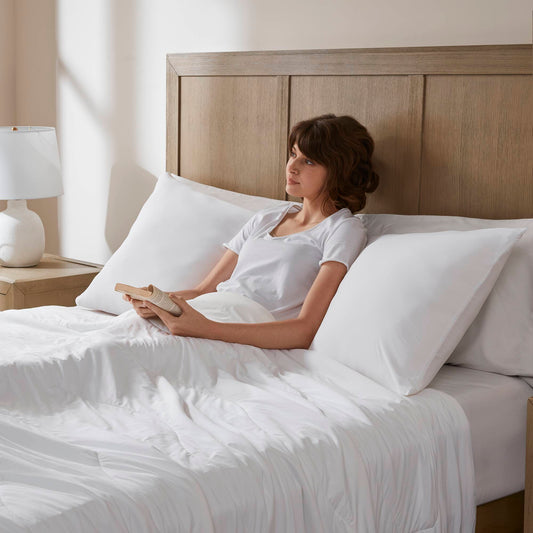
Flat bedding without layering: A single flat comforter, however good its quality, cannot achieve the visual depth and physical comfort of a properly layered hotel-style bed. Layering is the technique that creates the hotel feel, and it is the most common element missing from home bedrooms that aspire to hotel-level comfort.
Too many loud colors or patterns: Hotel bedding succeeds partly because it refuses to overstimulate the eye. Bedding in bold colors or complex patterns creates visual excitement that works against the relaxation a bedroom is meant to support. Calming, neutral luxury bedding sets consistently outperform visually busy alternatives in terms of how restful the room feels.
Low-quality synthetic fabrics: Polyester and microfiber bedding may look acceptable and feel soft on initial contact, but their breathability is poor compared to natural fibers, and they often trap heat in a way that disrupts sleep. The difference in comfort between quality cotton or linen and synthetic alternatives is immediately noticeable over the course of a full night's sleep.
Overcrowding beds with decorative pillows: Hotels use decorative pillows strategically and sparingly enough to create visual fullness and layering at the head of the bed without making the sleeping surface feel inaccessible or requiring ten minutes of dismantling before use. Too many decorative pillows create a visual busyness that undermines the calm, welcoming quality the hotel look depends on.
Ignoring texture variation: A bed where every element has an identical texture same fabric, same finish, same weight reads as flat regardless of the quality of the individual pieces. At least two or three distinct textures across the bedding arrangement are needed to create the visual depth that makes a bed look genuinely inviting rather than simply covered.
Poor bedding sizing and fit: Bedding that is slightly too small for the mattress it covers a comforter that barely reaches the sides, sheets with fitted corners that pull away overnight undermines the entire impression of quality and care that hotel-level bedding creates. Generous sizing is a non-negotiable element of the hotel look, and it is one of the simplest aspects to address.
How to Create a Hotel-Inspired Bedroom at Home
Invest in Better Bedding Fabrics
The most impactful single change available to anyone who wants their bedroom to feel more like a luxury hotel room is upgrading the base fabric quality of the bedding. Switching from synthetic or low-quality cotton to a genuine 100 percent cotton bedding set or to quality linen bedding produces an immediate and noticeable improvement in both the physical comfort of sleeping in the bed and the visual quality of how the bed looks. The crispness of quality cotton, the natural texture of good linen, the way these materials respond to light and touch these qualities are the foundation of everything else in hotel-level bedding comfort.
Focus on Layering Instead of More Décor
The instinct to improve a bedroom that feels flat or incomplete by adding more decorative objects artwork, plants, vases, additional accessories often misses the actual source of the problem. A bedroom that lacks comfort and warmth almost always lacks layering in the bedding rather than decorative objects in the room. Adding a quilted coverlet over the existing sheet set, introducing a textured throw at the foot of the bed, and building a proper pillow arrangement at the head will improve the room's comfort and visual quality more than any number of additional decorative pieces.
Keep Bedding Colors Calm and Neutral
Replacing bold or patterned bedding with a calm neutral palette is one of the most transformative changes available in bedroom redesign, and it requires no structural changes to the room itself. Soft whites, warm ivories, muted oatmeal, pale sage, and warm gray all create the visual calm that hotel bedding produces the sense of a room that has been prepared for rest rather than for visual interest. The relief that the eye experiences when entering a bedroom with genuinely neutral, calm bedding is immediate and measurable, and it directly contributes to how relaxed the room feels both to enter and to sleep in.
Use Coordinated Bedding Sets
The coordination between bedding elements that hotel rooms achieve the way the pillow covers relate to the comforter, the way the throw complements the overall palette, the way every element contributes to the same visual atmosphere rather than simply coexisting with the others is most easily achieved at home through coordinated bedding collections. Madison Park bedding sets, for example, provide multiple coordinated components in tones and textures designed to work together, which removes the guesswork from building the kind of complete, polished bedding arrangement that hotel rooms achieve. Starting with a coordinated collection and adding complementary accent pieces as needed is the most reliable path to the hotel-inspired bedroom look for most homeowners.
Frequently Asked Questions
Why do hotel beds feel softer than home beds?
Hotel beds feel softer for a combination of reasons that work together rather than any single factor. The bedding fabrics are typically higher quality 100 percent cotton in fine weaves that feel smooth and pleasant against the skin, or quality linen that has been softened through repeated washing. The layering is more intentional multiple complementary pieces rather than a single flat comforter which creates a physical depth and softness that single-layer bedding cannot achieve. The sizing is generous comforters and sheets sized larger than the mattress strictly requires, which produces the enveloping quality that guests notice immediately. And the whole arrangement is styled with consistent, professional attention to detail that creates the impression of care and quality before the bed is even touched.
What bedding materials do luxury hotels use?
Luxury hotels most commonly specify 100 percent cotton bedding for their primary sheet sets and comforter covers, choosing high-thread-count percale for its crisp, cool feel or sateen for a slightly silkier surface. Linen bedding appears increasingly in boutique and design-forward hotel properties, valued for its natural texture, breathability, and the relaxed luxury aesthetic it brings to a room. Quilted comforters and coverlets add structured warmth and visual texture to the layered arrangement, while plush throws in fine cotton, wool, or faux fur bedding accents provide the finishing layer of visual and tactile richness that distinguishes a genuinely hotel-inspired arrangement from a merely adequate one.
Are cotton bedding sets better for sleep?
Yes cotton bedding sets consistently outperform synthetic alternatives for sleep quality on the measures that matter most. Cotton breathes naturally, allowing body heat to dissipate rather than accumulate beneath the bedding, which helps maintain the stable, slightly cool sleeping temperature that supports deeper sleep cycles. Quality cotton is also genuinely soft against the skin in a way that does not degrade quickly it improves with washing rather than pilling or losing its surface quality. And the clean, fresh feeling of well-laundered cotton has a psychological dimension: sleeping in bedding that feels clean and pleasant creates a positive association with the sleep environment that subtly improves the quality of the experience.
Why is white bedding common in hotels?
White bedding became standard in luxury hotels for practical reasons that have since been reinforced by aesthetic ones. Practically, white bedding launders most reliably it can be washed at higher temperatures without color damage, bleached when necessary, and inspected for cleanliness with complete visual clarity. Aesthetically, white bedding creates an immediate impression of freshness, cleanliness, and light that no other color can quite match. It also provides the most neutral possible base for the layered, textural bedding arrangements that hotels favor nothing competes with the comforters, throws, and accent pillows layered over it because the base is as visually quiet as possible. These practical and aesthetic advantages together explain why white bedding has remained the default choice in luxury hotel rooms for decades.
How can I make my bed feel like a luxury hotel?
The most effective path to a hotel-level sleeping experience at home involves a small number of specific changes applied consistently. Start by upgrading the base fabric to quality natural cotton or linen bedding this single change produces the largest immediate improvement in both feel and appearance. Build a proper layered arrangement over this base: a flat sheet, a quality comforter or duvet, a quilted coverlet or throw folded at the foot, and a proper pillow arrangement with both sleeping pillows and a few well-chosen accent cushions. Keep the color palette neutral and calm whites, ivories, soft naturals in a coordinated tonal range rather than mismatched colors. Size the bedding generously, choosing pieces that drape past the sides of the mattress with comfortable depth. And finally, introduce warm, directional lighting beside the bed that illuminates the bedding softly rather than harshly. Applied together, these changes reliably close most of the gap between a home bedroom and a genuinely hotel-quality sleeping experience.
Final Thoughts: Why Luxury Bedding Changes the Entire Bedroom Experience
The comfort of a luxury hotel bedroom is not a mystery, and it is not the exclusive product of expensive interior design budgets. It is the product of consistent, intentional decisions about bedding decisions about fabric quality, layering approach, color coordination, sizing, and styling that can be understood, applied, and recreated in any home bedroom by anyone willing to pay attention to the same details that hotel designers attend to.
Bedding affects the bedroom experience more profoundly than almost any other single element. It shapes the first impression of the room, the physical experience of sleeping in it, and the psychological ease with which the mind and body transition from the demands of the day to the restoration of genuine rest. Investing in quality luxury bedding natural fibers that breathe and soften, layered textures that create depth and visual warmth, calm neutral palettes that reduce rather than add to the sensory load of the day is one of the most direct and most effective ways to improve the quality of daily life in a home.
The gap between a bedroom that merely functions and one that genuinely restores is smaller than most people assume. Better fabric. More thoughtful layering. A calmer palette. Generous sizing. Soft light. These are not dramatic or expensive interventions they are attainable improvements that, applied together, produce the kind of bedroom that genuinely feels like a retreat: a place where rest comes naturally, and where the quality of the sleep environment is something to look forward to rather than simply accept.