From Reading Nooks to Bedtime: Creating Comfortable Winter Corners at Home
Winter at home is really a series of small corners. A chair by a window, the end of a sofa, the last hour before sleep. Making those spots comfortable takes less than people expect, and it rarely requires a whole room refresh.
That's where bedding and good seating do the heavy lifting. A warm comforter without feeling stifling, a throw within arm's reach, a chair you actually want to sit in. Bedding sets help too, because the pieces already coordinate instead of competing.
The trick is treating each corner separately. A reading nook and a bed need different things, and neither one needs five layers to feel right.
Why Small Winter Corners Beat a Full Room Makeover
Because you use them. Most people spend winter evenings in two or three spots, not spread evenly across the house.
Fix those spots first. A lamp, a throw, a warmer layer on the bed. A full room refresh is expensive and slow, while corner updates are immediate and easy to undo when spring arrives.
Think about where you actually land with a cup of tea. That's the corner to start with.
How Do You Build a Reading Nook That Feels Warm?
Start with seating you'd stay in for an hour, then add one soft layer and one light source.
Accent chairs matter more than most people expect. Upholstered fabric feels warmer than a hard frame, and a chair with real back support gets used far more than a decorative one. In a shared space, that chair becomes part of your living room accent furniture, so it should sit comfortably beside the wood tones already in the room.
Then add a blankets and throws layer. Keep one folded over the arm rather than spread across the seat, so sitting down doesn't mean rearranging anything. A small table for a mug helps too.
Light does as much work as texture here. A warm bulb at shoulder height beats an overhead fixture every time.
What Makes a Bedtime Corner Different From a Reading Nook?
A bed needs breathable layers you can adjust at 2 a.m. A reading nook needs one layer you can simply push aside.
That difference guides everything. Beds work best with a smooth base, a breathable middle, and an insulating top. Chairs work best with a single throw and no fuss.
Think about how you sleep. Hot sleepers need breathability close to the skin. Cold sleepers need insulation above them. Couples often need both at once, which is exactly why separate removable layers help.
How Do You Layer a Bed for Winter Without Bulk?
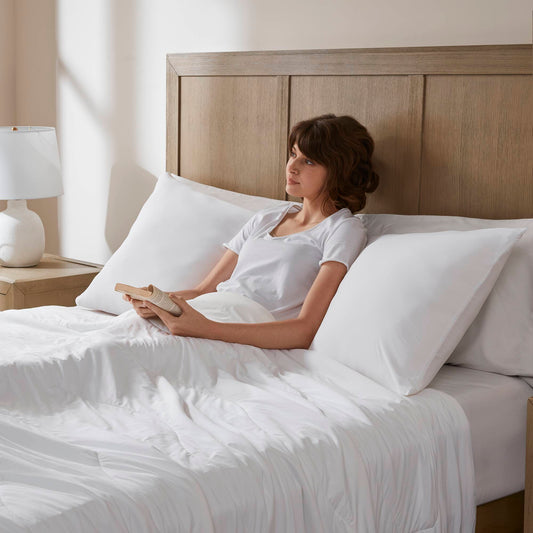
Begin with breathable sheets, add a light middle layer, then place the main insulating piece on top.
Cotton quilts are the most useful middle layer here. They add warmth without weight and fold back easily when the room warms up. Lightweight cotton quilts work especially well in heated homes, where a heavy comforter quickly becomes too much by midnight.
Cotton coverlets do similar work and look tidy during the day. A cotton quilt set option gives you the quilt and shams together, which saves you matching pieces later.
Above that sits the comforter itself. Choose weight by your actual room temperature, not by season labels. A bed blanket or throw folded across the foot gives you another option without adding weight everywhere.
Where Do Blankets and Throws Do the Most Work?
They cover the gaps. Feet that stay cold, shoulders that catch a draft, one side of the bed that runs cooler than the other.
Fleece blanket throws are light and warm for casual use. Cotton breathes better in heated rooms, and knits land somewhere in between. Heated blanket throws offer targeted warmth, and it's worth following the manufacturer's instructions on inspection, cleaning, and safe operation.
Position matters more than quantity. A blanket throw layer folded near your feet gets used. One stacked on a chair usually doesn't. Keep one within reach of wherever you sit, and a second near the bed.
People often look for the best blanket throws as though there's a single answer. There isn't. The right one matches your room temperature and how much laundry you'll realistically do. Madison Park offers a range of throws and quilts for exactly that reason.
How Can Accent Furniture Anchor a Winter Corner?
Furniture gives soft layers something to sit against. Without it, throws and quilts start to look like clutter.
Accent furniture doesn't have to mean big pieces. A small upholstered bench at the foot of the bed, a side table beside a chair, a basket for extra blankets. Console tables work well in hallways and behind sofas, and a wood tone balances all that nearby fabric.
Clean, simple contemporary furniture keeps a room from feeling crowded once winter layers arrive. If a corner already has good bones, you may only need a lamp and a throw.
How Do You Choose Bedding That Suits Both Sleep and Style?
Pick for comfort first, then let the design follow. It's far easier than the reverse.
Luxury bedding should hold up to nightly use, not just look good in photographs. Luxury bedding sets usually include coordinated shams and a comforter, which removes most of the guesswork. Soft bedding sets suit anyone who wants a gentler feel against the skin.
If your room leans minimal, modern bedding sets keep the lines clean. Designer bedding sets tend to offer more pattern and detail. Both can work in winter with the right throw on top.
For warmth, soft comforter sets and bed comforter sets cover most bedrooms well. If you're outfitting a guest room or a full-size bed, comforter sets full options are worth checking for piece counts and dimensions before ordering.
Common Mistakes in Winter Corner Decorating
Overloading a corner is the big one. Three throws and four pillows on one chair means none of them feel comfortable anymore.
Other frequent issues include choosing a comforter by appearance before checking fill and weight, buying bedding without confirming mattress size, and overlooking how a fabric needs to be cleaned. Plush textures are lovely, but they ask for more careful handling.
Heated bedding deserves its own attention. Inspect cords, avoid folding it tightly while running, and follow the manufacturer's guidance without shortcuts.
A corner should also stay easy to use. If getting comfortable means moving three things, the setup won't survive past January.
Start With the Corner You Use Most
You don't need to redecorate a whole house to make winter feel easier. Pick the corner you sit in every evening and fix that one first. Add a breathable middle layer, a throw within reach, and a warmer light. Then do the same beside your bed with a comforter suited to your room and a quilt you can fold back when you get too warm. Build outward from there, and the rest of the house tends to follow.
Frequently Asked Questions
What Makes a Corner Feel Warm in Winter?
Soft seating, one accessible throw, warm lighting, and a breathable layer nearby can make a corner feel more inviting in winter. Texture creates visual warmth, while comfortable materials and a suitable room temperature provide actual warmth.
How Many Layers Does a Winter Bed Need?
Three or four layers are usually enough. Start with sheets, add a light middle layer such as a cotton quilt, then use a comforter for warmth and an optional throw at the foot of the bed for added texture.
Are Heated Throws Safe to Use?
Heated throws can be used safely when you follow the manufacturer's instructions. Inspect the throw regularly, avoid tightly folding it while it is operating, and stop using it if you notice damaged wiring, fraying, or other signs of wear.
How Do I Choose Between a Quilt and a Comforter?
A quilt is typically lighter and breathable, making it useful for layering, while a comforter generally provides more insulation. For winter, you can use both, with the quilt underneath the comforter for added warmth and texture.

Related Articles