Why Texture Matters More When the Temperature Drops
Explains how bedding textures and layers affect sleep comfort when the weather suddenly turns cold. Key takeaways: more layers do not always mean more warmth; start with bedding you already own; add cotton quilts, coverlets, or throws instead of buying separate winter sets; mix two or three textures for depth; and judge comfort by how you feel in the morning.
You know that first properly cold night when getting into bed suddenly feels different?
The sheets feel colder. You pull the comforter a little higher. That blanket sitting at the back of the closet suddenly looks like something you should have kept nearby.
The bedroom has not really changed. Same mattress. Same pillows. Same sheets.
But you notice the bed more.
When the temperature drops, the way bedding feels becomes just as important as how it looks. You notice the softness of the fabric, the weight of the comforter, and whether an extra layer actually makes the bed more comfortable.
The good news is that you do not necessarily need a completely new setup. Sometimes changing one or two textures is enough.
Cold Weather Changes How Your Bed Feels
During warmer months, a sheet and lightweight blanket may be all you want. When the weather cools down, those same pieces can suddenly feel a little too thin.
This is when texture starts to matter.
A smooth cotton sheet feels cool and crisp. A quilt has more body. A fluffy comforter feels different again. A soft throw gives you something extra to pull over your feet when the room gets chilly.
That does not mean you need the thickest bedding you can find.
In fact, adding too many layers can make the bed uncomfortable. If you tend to sleep warm, you probably know what happens. You fall asleep feeling cozy and wake up a few hours later pushing half the bedding onto the floor.
The right combination depends on how you sleep and how cold your bedroom actually gets.
More Layers Do Not Always Mean More Warmth
It is easy to assume that more bedding means more comfort.
It does not always work that way.
A heavy comforter may be perfect for someone who gets cold easily and completely wrong for someone who sleeps warm. A lightweight quilt may be enough for one bedroom but not nearly enough for another.
That is why shopping for bedding sets should involve more than looking at how fluffy everything appears.
Think about what you already know about yourself.
Do you wake up cold? Do you usually throw the covers off during the night? Do you like some weight over you, or would you rather have several lighter layers?
Those answers are useful when choosing between soft bedding sets, soft comforter sets, and other options.
Your bed needs to work at 2 a.m., not just look good when it has been freshly made.
Start With What You Already Own
Before buying new luxury bedding sets, take a look in the closet.
You may already have enough pieces to handle colder nights.
That quilt you stopped using in spring could go underneath your comforter. The blanket you usually keep on the sofa could move to the bedroom. A lightweight throw may be all you need on a mildly cold night.
Layering gives you some flexibility.
This is one reason cotton quilts are so useful. They can add another layer without making the bed feel as bulky as a heavy comforter. Lightweight cotton quilts are particularly useful when the weather is cool but not freezing.
If you want coordinating pieces, cotton quilt sets can make putting together a layered bed easier.
You can also look at cotton coverlets. They add a lighter layer and can work on their own during milder weather or alongside other bedding when the temperature falls.
Cotton Is Not Just for Summer
Cotton often gets associated with warm weather, but it works well in cooler months too.
The important thing is that cotton bedding can come in very different weights and constructions.
A cotton sheet, quilt, and cotton comforter will not feel the same. That is useful because you can build a bed around the level of warmth you actually need.
A cotton bedding set can be a simple starting point. You'll see plenty of variations on cotton bedding while shopping, organic, luxury, all-cotton comforter sets but the label matters less than how the finished bed actually feels.
If you like cotton and want a more complete setup, cotton comforter sets can bring the comforter and coordinating pieces together. An organic cotton comforter may appeal if organic cotton is important to you.
You may also see terms such as best cotton comforter, all cotton comforter, and all cotton comforter sets while shopping.
The labels can vary.
What matters more is how the finished bed feels.
Texture Can Make a Simple Bed Look Better
Not every bedroom needs more color when the weather changes.
Sometimes it just needs more texture.
Picture a plain comforter on its own. It can look clean and simple, but perhaps a little flat. Now add a quilt across the bottom of the bed and a woven throw over one side.
The colors have not changed.
The bed simply has more depth.
That is part of the appeal of luxury bedding. It does not have to mean piling on decorative pillows or covering every inch of the bed. A thoughtful mix of materials can make the room feel richer without making it look busy.
The same applies to modern bedding sets and designer bedding sets. Even a simple design can feel more interesting when different textures are allowed to stand out.
And if you are shopping for full bedding sets or full size bedding sets, the same principle applies. Get the fit right first, then think about how you want the different layers to feel.
A Throw Is More Than Decoration
Throws sometimes get treated as something that simply sits at the end of the bed.
They are much more useful than that.
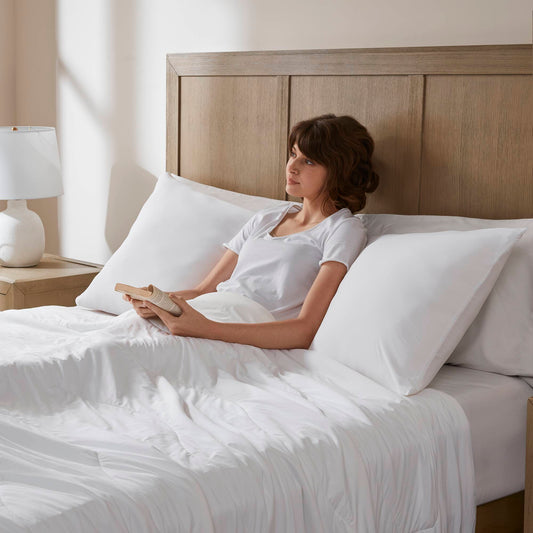
You can pull one over yourself while reading, keep it nearby for a colder night, or fold it away when you get too warm.
That is the practical side of blankets and throws.
Whatever you call it, a throw, a bed blanket, a lap blanket, the purpose is the same: an extra layer that's easy to reach and easy to remove.
Fleece blanket throws can give you a noticeably plush feel. Heated options, sometimes listed as heated blankets, offer a different approach altogether.
You do not need every type.
One blanket that you actually enjoy using is more useful than a stack of throws that mostly sit untouched.
What About a Cotton Comforter?
A cotton comforter can be a good choice if you want a softer, familiar feel without automatically choosing the heaviest possible bedding.
But cotton alone does not tell you how warm a comforter will be.
Look at its construction, filling, and weight.
If you already have a comforter that works for you, there may be no reason to replace it. Add a quilt underneath when you need more warmth. Keep a throw nearby for particularly cold nights.
This gives you more control than relying on one very heavy layer.
It can also make seasonal changes easier. You are adjusting the bed instead of completely replacing it.
You May Not Need Separate Winter Bedding
Some people like having completely different bedding for summer and winter.
Others simply add or remove layers.
Both approaches can work.
If your existing comforter sets still feel comfortable, keep using them. Add a quilt when the temperature falls. Put a blanket at the foot of the bed. Remove that extra layer when the room warms up again.
No rule says a bedroom needs a dedicated winter setup.
In fact, changing a couple of pieces can be easier, cheaper, and less cluttered than storing multiple complete sets.
A Madison Park bedding collection can make this easier because coordinated pieces can bring together different textures without making the bed look overly busy.
Pay Attention to How You Feel in the Morning
Bedtime is only half the test.
Think about what happens when you wake up.
Are you comfortable? Did you wake up sweating? Were your feet cold? Did you spend half the night looking for another blanket?
Those details tell you what your bedding is actually doing.
It is easy to shop based on how something looks on a perfectly made bed. But you are not sleeping in that photograph.
You are sleeping in the dark, half awake, when the room may be at its coldest.
That is when comfort matters most.
Mixing Textures Does Not Have to Be Complicated
Different textures do not have to match perfectly.
A smooth sheet can sit underneath a quilted layer. A plain comforter can work with a textured throw. A cotton coverlet can add another light layer without making the whole bed feel heavy.
The trick is knowing when to stop.
If the comforter already has plenty of detail, keep the throw fairly simple. If the main bedding is plain, let the quilt or blanket provide the interest.
You do not need six different fabrics. Two or three can be plenty.
Madison Park uses a mix of fabrics, patterns, and finishes across its bedding collections, making it possible to create this layered effect while keeping the overall bedroom coordinated.
Sometimes One Extra Layer Is Enough
There is something nice about changing the bed when the weather turns cold.
You pull an old quilt from the closet. You find the blanket you forgot about. Maybe the comforter that seemed too warm a few months ago suddenly feels exactly right.
The whole room feels a little different.
It does not need to become a completely different bedroom.
That is really the useful thing about texture. It gives you another way to change how the bed feels without automatically making it heavier.
A quilt may be enough. A cotton coverlet may be enough. A soft throw might be all you need.
So when the temperature drops, do not automatically reach for the thickest bedding you can find.
Start with the bed you already have.
Notice what is missing and add that.
Frequently Asked Questions
What Type of Bedding Is Best for Cold Weather?
It depends on how cold your bedroom gets and how warm you sleep. Layering a comforter with a quilt or throw can add warmth without making the bed feel too heavy.
Are Cotton Quilts Good for Winter?
Yes. Lightweight cotton quilts can add an extra layer of warmth while keeping the bed comfortable and breathable.
Do I Need Separate Winter Bedding?
Not necessarily. You can often use your existing comforter sets and add a quilt, blanket, or throw when temperatures drop.
How Can I Make My Bed Feel Warmer Without Buying New Bedding?
Try adding a quilt underneath your comforter or keeping a soft throw at the foot of the bed. Changing the layers you already own can make a noticeable difference.
How Many Bedding Layers Should I Use in Cold Weather?
There is no set number. Start with your usual sheets and comforter, then add one layer at a time until the bed feels comfortable without becoming too warm.

Related Articles