How to Choose the Right Bedding Colors for a Relaxing Bedroom
Why Bedding Colors Matter for a Relaxing Bedroom
The bedroom is not just the place to sleep; it serves a greater purpose of being a sanctuary to unwind you from the frantic pace of the hectic life.
When you step through the bedroom door at the end of the day, the bedroom environment must immediately signal your brain to decelerate.
While mattress quality and room temperature play a huge role in achieving it, the visual landscape of the room, especially bedding sets, plays a vital role in how quickly you go to a tranquil state.
Choosing the right bedroom color palette is the most important way to influence your sleep quality.
Color is not just an aesthetic choice, but a psychological trigger. While the bed is the focal point of the room, the colors you choose for bed blankets, quilts, and pillows set the emotional tone for the entire room.
By choosing calming bedroom colors and tactile elements, you can transform a sterile room into a haven of rest.
This guide will walk you through the art of selecting the right colors and textures to create a cohesive and highly relaxing bedroom decor.
Understanding the Psychology of Bedroom Colors
How Colors Influence Mood and Sleep
Our brain triggers with certain colors, especially with specific wavelengths of light with emotional states. When it comes to the bedroom, the goal is to lower the heart rate and reduce cortisol levels.
When you use soft, muted colors, also known as receding colors, you will find the room feels more spacious and quiet.
Conversely, when you use high-energy colors like bright red or yellow, it might stimulate the mind, making it harder to drift into deep sleep.
By choosing the soft color tones palette, you give your eyes a relaxed state of emotion every night.
Why Neutral Bedding Colors Work Best
Have you noticed that almost all spas and hotels have neutral bedding Colors like ivory, champagne, beige, and soft gray? Neutrals are excellent at relaxing individuals instantly.
They don't demand your attention, while offering incredible versatility to swap out seasonal accessories without needing a complete overhaul.
In addition to that, neutral bedding sets evoke a sense of cleanliness and airy simplicity, turning the room into a minimal bedroom aesthetic that gives a calming appeal.
Choosing Bedding Sets as the Foundation of Your Bedroom Color Palette
Selecting the Base Color for Your Bed
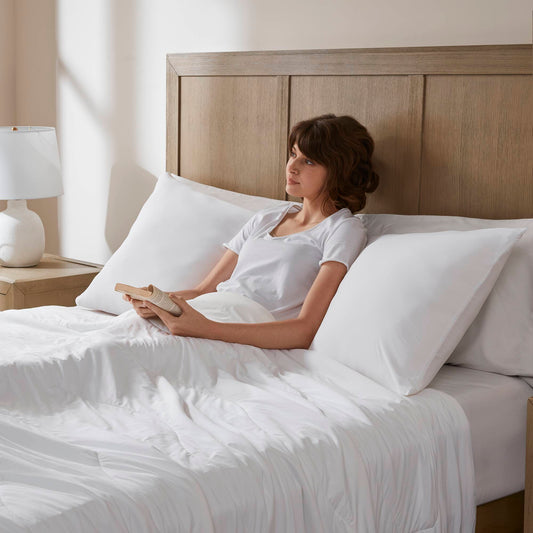
When starting your design journey, your primary bedding sets the sheets, and the duvet or comforter serves as the canvas. This base color should ideally be a shade that promotes color harmony in décor.
If your walls are a crisp white, a sandy beige, or a light "greige" a bedding set can provide just enough contrast to feel sophisticated without breaking the tranquil vibe.
Using Bedding Sets to Balance the Room
Bedding acts as a visual anchor. If your bedroom features bold architectural elements or dark wood furniture, a lighter bedding set can balance the "heaviness" of the room.
Alternatively, if your room feels too cold or cavernous, a deeper neutral bedding set can make the space feel more grounded and intimate.
Warm vs Cool Bedding Color Palettes
Warm Bedding Colors for a Cozy Atmosphere
For those who want their bedroom to feel like a warm hug, warm neutrals are the way to go. Think of shades like cream, taupe, toasted almond, and very dusty blush.
These colors are particularly effective in rooms that don't get much natural sunlight. To enhance this feeling, integrating quilts in these earthy tones adds a layer of visual depth that feels both traditional and incredibly cozy.
Cool Bedding Colors for a Calm and Airy Feel
If your priority is a "breathable" and fresh environment, cool bedroom colors are your best bet. Pale blues, sage greens, and soft lavenders are scientifically linked to lower blood pressure.
These colors mimic the sky and the sea, promoting a sense of vastness and peace. Pairing these with lightweight bedding materials like linen ensures the room feels as breezy as it looks.
Creating Depth with Layered Bedding
Adding a Bed Blanket for Extra Texture
A flat, one-dimensional bed rarely looks "relaxing" it looks unfinished. Adding a bed blanket is the first step in building a layered bedding look.
A blanket in a slightly different shade than your duvet adds a subtle "pop" of interest. For a professional, modern bedroom styling touch, try folding the blanket in thirds and draping it across the foot of the bed.
Layering Quilts and Coverlet Sets
Coverlet sets and quilts are the secret weapons of interior designers. Unlike bulky comforters, these pieces provide decorative bedding layers that are sleek and structured.
A quilt with a subtle stitch pattern introduces texture without introducing visual "noise," keeping the cozy bedroom atmosphere intact while adding sophisticated detail.
Mixing Fabrics for Visual Interest
To prevent a neutral room from looking boring, mix your fabrics. Combine a smooth cotton bedding set with a stonewashed linen bed blanket and a quilted coverlet.
This interplay of light and shadow on different surfaces creates a richness that monochrome colors alone cannot achieve.
Using Fur Throws and Blankets for Texture and Comfort
Why Fur Throws Add Luxury to a Bedroom
Texture is a tactile form of color. Fur throws, whether faux or sustainably sourced introduce a high-end, tactile element that screams luxury.
They soften the hard lines of a bed frame and invite you to touch and relax. A cream-colored fur throw on a gray bed adds an immediate sense of "hygge" or comfort.
Styling Blankets Without Overcrowding the Bed
The key to a minimal bedroom aesthetic is restraint. Use fur throws and decorative blankets sparingly.
One well-placed throw at the corner of the bed is often more effective than three or four cluttered blankets. This maintains a clean look while still enhancing the overall bedroom color palette.
Choosing Accent Colors That Complement Your Bedding
Using Pillows and Accessories for Color
If you love color but fear it might ruin your sleep, use it in your accessories. Throw pillows are the perfect medium for experimenting with pastel bedding accents or muted jewel tones like moss green or dusty terracotta.
These small hits of color provide personality without overwhelming the senses.
Keeping Accent Colors Balanced
The "60-30-10" rule is helpful here: 60% of your room should be your primary neutral, 30% a secondary shade (like your coverlet sets), and only 10% should be your accent color. This ensures your relaxing bedroom décor remains focused on serenity.
Common Bedding Color Mistakes to Avoid
- Mixing Too Many Colors: Using more than three distinct colors can make the bed look chaotic. Stick to a tight palette.
- Ignoring Undertones: A "warm" white and a "cool" white can clash. Ensure all your neutral bedding colors share the same base undertone.
- Skipping Texture: If everything is the same flat material, the room will feel clinical rather than relaxing. Always add a layer of texture via quilts or throws.
Final Tips for Creating a Relaxing Bedroom
Choosing the right colors for your bedroom is a task of combining science and soul. By choosing calming bedroom colors and investing in high-quality bedding sets, you create a perfect bedroom that wraps you calmly.
Remember that most inviting beds are the ones that look lived-in, yet intentional.
Smartly layer bed blankets, quilts, and coverlet sets to customize your warmth and style simultaneously.
When your colors are balanced and textures are soft, your bedroom becomes the ultimate sanctuary for your mind and body.
Frequently Asked Questions
What are the best bedding colors for a relaxing bedroom?
Natural bedding colors like ivory, champagne, beige, and soft grey are ideal for creating a calm and relaxing bedroom. You can also use muted shades of blue and sage green to introduce subtle color while maintaining a soothing atmosphere.
Should bedding sets match the wall color?
There is no strict requirement for bedding to match wall colors, but they should complement each other for a cohesive look. For example, light gray walls pair well with charcoal or white bedding to create a sophisticated and balanced aesthetic.
Are warm or cool colors better for sleep?
It depends on personal preference. Cool colors like blue and green are known to lower heart rate and promote calmness, while warm tones like creams and tans create a sense of comfort and coziness.
How can I add color without overwhelming the room?
Use neutral tones for your main bedding and introduce color through accents like throws, decorative pillows, or a folded bed blanket. This approach adds visual interest without overwhelming the space.
What bedding layers create the most comfortable bed?
For maximum comfort and style, layer a high-quality sheet set with a medium-weight duvet. Add a quilt or coverlet for extra weight and finish with a bed blanket at the foot for added texture.

Related Articles