The Winter Comfort Upgrade: Where Soft Layers Make the Biggest Difference
A cold bed usually isn't cold because you need five blankets. It's cold because the layers closest to your body aren't doing their job. Most people notice a real difference once they fix the surfaces they actually touch: the sheet, the protector, the pillowcase, and the layer right above them.
That's where bedding earns its keep. Sheets, protectors, cotton quilts, comforters, and pillowcases each do something different. Together they create a softer sleep surface, warmth you can adjust, better moisture control, and less cold air sneaking in around your shoulders. A comforter adds insulation, but it can't fix a scratchy sheet or a mattress that sags.
The goal is simple: stay warm without feeling pinned under weight. Here's where soft layers make the biggest difference and how to build them in the right order.
Where Do Soft Bedding Layers Make the Biggest Difference?
Soft layers matter most in four places: under your body, against your skin, around your shoulders and feet, and anywhere cold air slips into the bed.
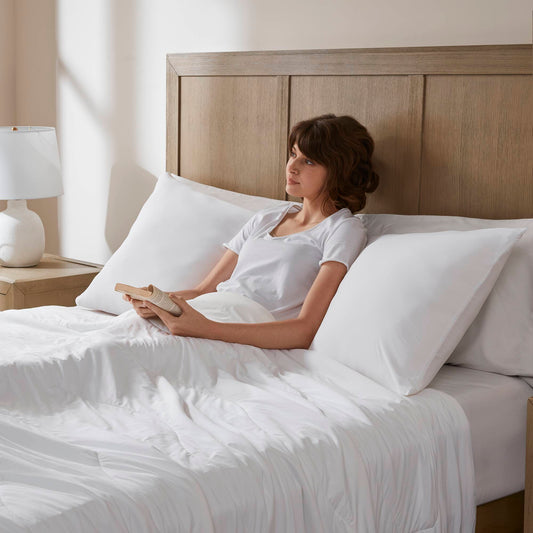
A mattress protector or pad sits beneath the fitted sheet and changes how the whole bed feels. Smooth, breathable sheets handle skin contact. A quilt or coverlet across the body adds a light middle layer. An evenly filled comforter does the main insulating work. A folded blanket near the feet helps anyone whose toes never warm up, and a decent pillowcase matters because your face rests on it for hours.
Layering in the right order beats stacking heavy blankets on top. Good soft bedding sets and comforter sets are built around this idea, and so are the bed blankets and throws plenty of people keep folded at the foot of the bed. At Madison Park, we design our sets with exactly that kind of layering in mind.
What Is the Best Order for Layering a Bed in Winter?
Start with protection, then breathable sheets, then a light quilt or coverlet, then the comforter, and finish with something removable on top.
In practice, that means a mattress protector, a fitted sheet, an optional flat sheet, a lightweight cotton quilt or cotton coverlet, the comforter, and a folded blankets and throws layer. Sleeping pillows go on last, with one or two decorative ones at most.
Every layer should have a reason to be there. Removable top layers let you adjust warmth at 3 a.m. without stripping the whole bed.
How Does a Mattress Protector Affect Winter Comfort?
A mattress protector mainly protects the mattress. It can make the surface feel slightly softer and cleaner too, but insulation isn't its job.
Waterproof protectors block spills. Padded and quilted versions add cushioning. Breathable protectors reduce heat buildup. Fitted styles are easiest to manage, while encasement versions cover the whole mattress. A protector isn't the same as a mattress pad or topper, and none of them can fix sagging or poor support. If a mattress has given up, no layer of bedding will rescue it.
Cooling bedding still has a place in winter, by the way. Heated rooms, thick comforters, and shared body heat can push a bed past comfortable. Breathable sheets and lightweight cotton quilts help people who sleep hot without leaving their partner cold.
Do Cotton Bedding Sets Work Well in Winter?
Yes. Cotton works well in winter because it breathes, feels soft against the skin, and layers easily with quilts and comforters.
A cotton bedding set can be used year-round, and the weave changes how it feels. Percale feels crisp, sateen feels smoother, and heavier weaves feel denser. What cotton doesn't do is make a bed warm on its own. Insulation comes from the comforter filling, quilt construction, and total weight above you.
Which Comforter Features Matter Most During Winter?
Fill type, fill distribution, weight, outer fabric, stitching, size, breathability, and care all matter.
Warmth levels run from lightweight to medium to heavy. Box stitching and quilted construction stop filling from sliding into corners. Check actual dimensions instead of trusting a size name, and confirm it's machine washable if that matters to you.
A cotton comforter with a cotton shell isn't the same as an all-cotton comforter. For a lot of beds, a cotton comforter set hits a good balance between warmth and breathability, and well-reviewed cotton comforter sets usually get the fill distribution right. Reviews that rank the best cotton comforter tend to focus on stitching and loft for that reason.
Can a Cotton Quilt Improve Comfort Beneath a Comforter?
Yes. A cotton quilt adds a breathable middle layer, so you get extra warmth without the bulk of a second thick comforter.
Use one over the sheets in mild winter weather, beneath a comforter on colder nights, or folded at the foot of the bed. It also works as a daytime cover or as an individual layer when one partner runs warm. Thickness varies a lot between cotton quilt sets, so check the filling and construction. Cotton bedding quilts with denser stitching tend to hold their shape better over time.
How Can Blankets and Throws Add Targeted Winter Warmth?
They warm one area at a time. Feet, legs, shoulders, or one side of the bed get extra coverage without adding weight everywhere.
Fleece blanket throws are light and insulating. Cotton versions breathe better. Knit throws sit somewhere in between. Heated blanket throws offer controlled warmth, though you should follow the manufacturer's instructions, check cords regularly, and stop using anything damaged. Keep a folded blanket throw layer within reach rather than permanently across the bed. Shoppers searching for the best blankets and throws will find the honest answer is simpler: the best one suits your temperature and washing habits.
What Bedding Works Best for a College Dorm Room?
Dorm bedding should be washable, durable, and correctly sized. Comfort matters, but storage and laundry access matter just as much.
A breathable sheet set, a fitted mattress protector, a lightweight comforter, a cotton quilt, and a compact throw cover most needs. Reversible pieces give you more styling options in a small room. Check residence hall rules before bringing in electrical bedding.
Do Dorm Beds Need Twin or Twin XL?
Twin mattresses are shorter than Twin XL mattresses, and many dorm beds are Twin XL. Twin XL fitted sheets need the extra length, and some twin comforters still fit depending on their measurements. Mattress depth affects sheet fit too. Piece counts vary between bedding sets, and not every set includes sheets, so review actual measurements rather than the size label. Bed comforter sets sold as twin may or may not work on a longer dorm mattress.
How Can Couples Adjust Winter Bedding for Different Sleep Temperatures?
Use shared breathable bedding as a base, then let each person adjust on their own side.
A breathable sheet set, a medium-weight shared comforter, and separate throws or a lightweight quilt on one side usually works better than one very heavy layer. Moisture-friendly pillowcases help the partner who runs hot. Luxury bedding sets can look coordinated while still allowing separate layers, and cotton coverlets are easy to add or remove quietly.
Can Soft Layers Create a Luxury Hotel-Style Winter Bed?
Yes. Hotel-style comfort comes from smooth sheets, supportive pillows, an evenly filled comforter, and one or two neatly arranged removable layers, not from piles of decoration.
Luxury bedding feels good partly because it's properly sized and well maintained. The same approach works in a guest room. Fresh cotton sheets, a medium-weight comforter, a lightweight quilt, an extra blanket, and pillows in two firmness levels let guests adjust without asking. Neutral modern bedding sets can be refreshed with a seasonal throw, which is easier than storing several full sets. Designer bedding sets work well in guest rooms.
Common Mistakes People Make When Layering Winter Bedding
The most common ones are using too many heavy layers, ignoring breathability, buying the wrong size, and choosing softness without thinking about support or washing.
More layers don't automatically mean more comfort. A thick topper won't fix a bad mattress. Ignoring mattress depth leads to sheets that pop off corners. Confusing Twin and Twin XL wastes money. Several layers can trap heat and moisture. Hanging bedding over a vent blocks heat. Damaged heated blankets are a genuine safety risk. If you prefer natural fibers throughout, all-cotton comforter sets keep things simple, while soft comforter sets suit heated rooms where heavy fill feels like too much.
How Should Winter Bedding Layers Be Washed and Stored?
Follow the care label on each layer, dry everything completely, rotate the pieces you use most, and store clean seasonal items somewhere dry.
Wash mattress protectors regularly. Don't overload the machine. Skip heavy fabric softener, which can coat fibers. Dry bulky comforters all the way through and redistribute the filling by hand afterward. Cotton quilts benefit from being fully dry before storage, and cotton bedding sets last longer when they're rotated instead of used every single night.
Where to Go From Here
You don't need to replace the whole bed to sleep warmer. Fix the surfaces you touch first, then add adjustable layers where cold actually reaches you. Start with breathable sheets and a properly fitted protector, choose a comforter that suits your room, and keep cotton quilts or cotton coverlets nearby for the nights you need a little more. A few well-chosen blankets and throws and the right bedding sets will do more for winter comfort than a stack of heavy covers ever will.
Frequently Asked Questions
What Bedding Layer Makes the Biggest Difference During Winter?
The layer against your skin and the one directly above it make the biggest difference. Breathable sheets paired with an evenly filled comforter can have a greater impact on warmth and softness than adding extra decorative layers.
Can Cooling Bedding Be Used During Cold Weather?
Yes. Heated rooms and thick layers can sometimes trap excess heat, so breathable sheets or a lightweight cotton quilt can help maintain a more comfortable sleeping temperature even during colder weather.
What Is the Correct Order for Layering Winter Bedding?
A practical order is mattress protector, fitted sheet, optional flat sheet, quilt or coverlet, comforter, and a removable blanket or throw layer. Adjust the layers according to your room temperature and personal comfort.
Do College Dorm Beds Require Twin or Twin XL Bedding?
It depends on the school, but many college dorms use Twin XL mattresses. Check the mattress length and depth provided by the school, and compare actual product measurements rather than relying only on size names.
How Many Blankets Should You Use on a Bed in Winter?
One or two removable layers are usually enough. Cotton bedding sets paired with a single throw can provide flexible warmth and temperature control without making the bed overly bulky.

Related Articles